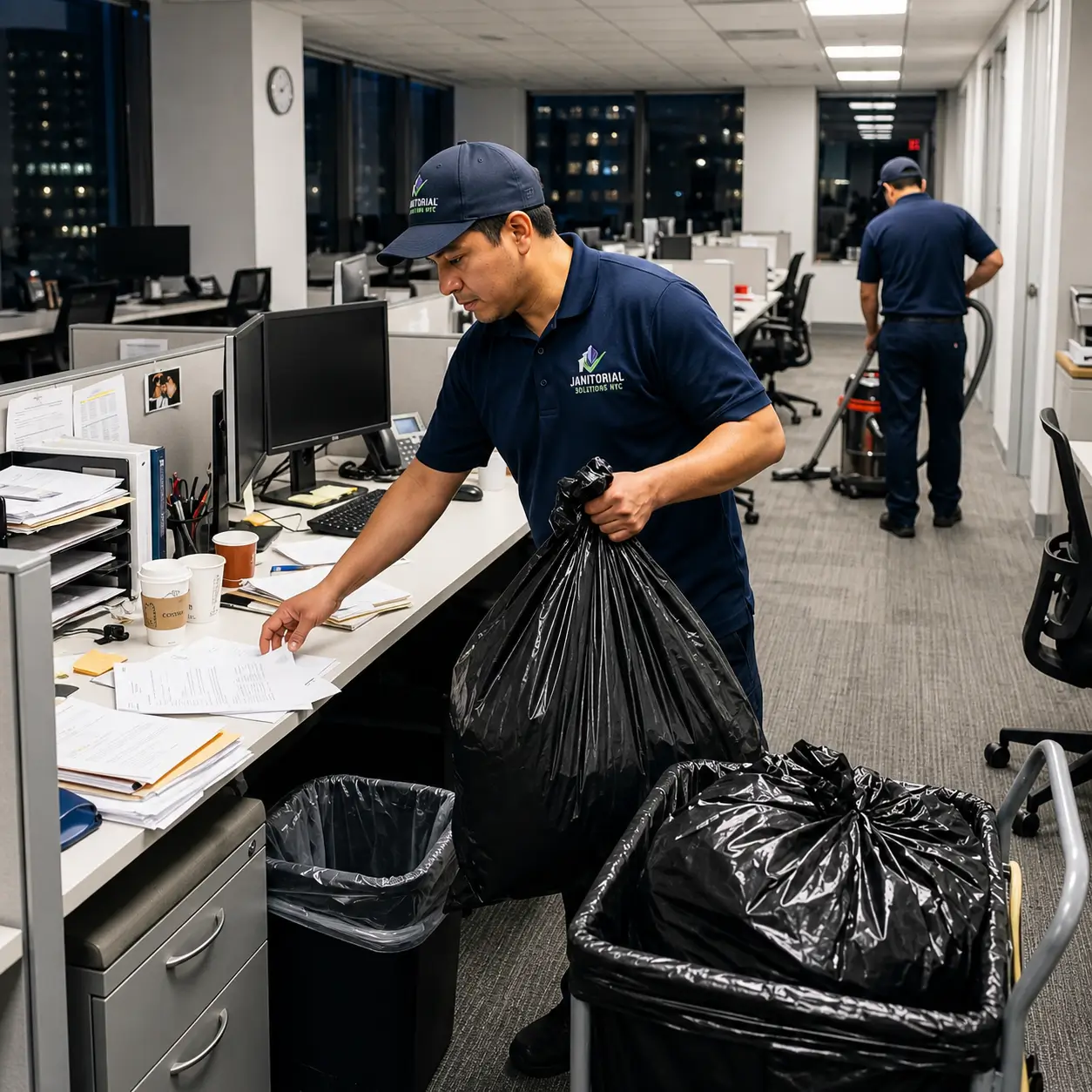
Hiring a night janitorial service for your NYC office might sound simple until you look at the contract. One janitorial company lists five tasks while another lists twenty. Some include restroom sanitization every night while others charge extra for it. Even something as basic as emptying trash bins under every desk can be considered a standard task by one provider and an add-on by another.
A vague contract can lead to unexpected charges, missed tasks, and confusion about who is responsible for certain areas. A detailed scope of work makes it clear what gets cleaned, how often each task is performed, what supplies are included, and which services cost extra.
Here is what you can typically expect from night janitorial services in NYC and what you should check before signing a contract.
Daily Cleaning Included in Night Janitorial Services
Daily cleaning covers the routine work needed to keep an office clean and ready for employees each morning. The exact scope varies by building and contract, but most recurring night janitorial programs include the following.
Floor Care
Office floors collect dirt, dust, food crumbs, spills, and grime throughout the day. NYC buildings also deal with street dirt, rain, snow, and salt being tracked inside.
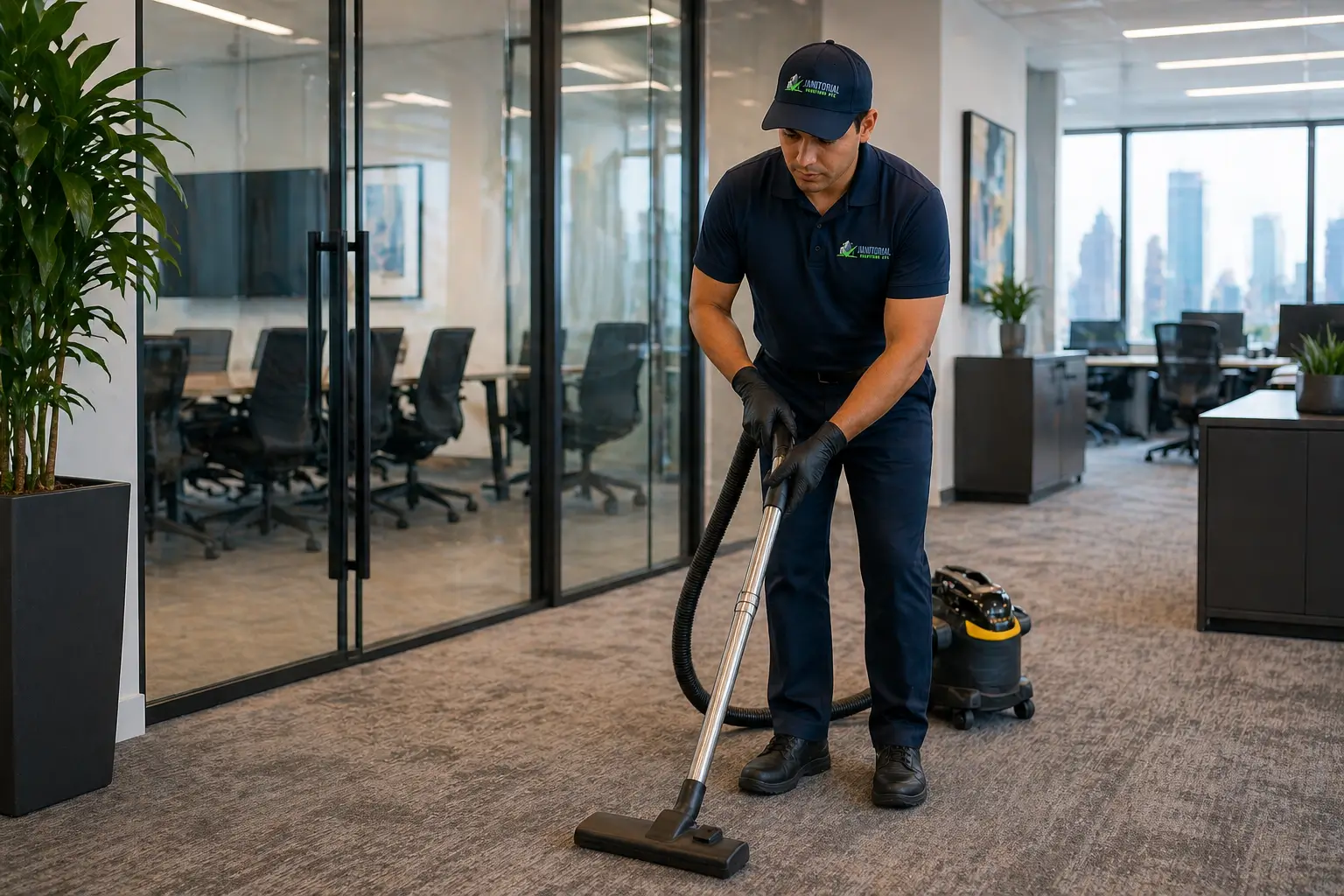
Night janitorial crews typically vacuum carpeted areas, including corners, areas under desks, and edges along baseboards. Hard floors are swept and mopped using cleaners appropriate for the flooring material. High-traffic areas and visible spills receive additional attention, while entrances are cleaned carefully because they collect the most street debris.
Spot treatment can also be performed on carpet stains and other noticeable marks when included in the cleaning scope.
Trash and Recycling Removal
Trash removal is one of the most visible parts of nightly office cleaning. Bins throughout workstations, conference rooms, kitchens, restrooms, and common areas are emptied according to the agreed scope.
New liners are installed where needed, and recycling is separated according to the building’s requirements. Trash and recycling are then moved to the property’s designated disposal or collection area.
Bin exteriors and lids can also be wiped down when they have visible dirt or residue.
Restroom Cleaning and Restocking
Restrooms need consistent cleaning because they receive frequent use throughout the workday. A typical nightly restroom cleaning includes:
- Toilets and urinals cleaned and disinfected
- Sinks and countertops wiped and sanitized
- Faucet handles cleaned
- Mirrors and glass surfaces cleaned
- Restroom floors swept and mopped
- Stall doors and partitions wiped down
- High-touch surfaces disinfected
- Toilet paper and paper towels restocked
- Hand soap and sanitizer replenished when included
- Trash emptied and liners replaced
The contract should clearly state whether restroom supplies are provided by the janitorial company or the building.
Kitchen and Breakroom Cleaning
Office kitchens and breakrooms collect food crumbs, spills, coffee residue, and fingerprints throughout the day. Night cleaning helps prevent that buildup from carrying into the next morning.
Countertops, tables, sinks, faucet handles, and other commonly used surfaces are cleaned. Microwaves can be wiped inside and outside, while coffee stations, water dispensers, refrigerator handles, and vending machine surfaces are cleaned according to the agreed scope.
Floors are swept and mopped, and food-related spills receive additional attention.
Dusting and Surface Wiping
Dust can settle quickly on desks, shelves, cabinets, window sills, and other horizontal surfaces. Night janitorial crews can wipe accessible surfaces using microfiber cloths and appropriate cleaning products.
Common areas for dusting include:
- Desks and work surfaces
- Shelving and filing cabinets
- Window sills
- Baseboards
- Cabinet fronts and handles
- Door handles
- Light switches
- Picture frames and decorative items
- Reception counters
- Accessible office equipment
Personal paperwork, sensitive documents, and employee belongings are generally left undisturbed unless the client specifically requests otherwise.
Common Area and Shared Space Cleaning
Office cleaning should not stop at individual workspaces. Hallways, corridors, copy rooms, mailrooms, shared lounges, and other common areas also collect dirt and debris during the workday.
Depending on the contract, night janitorial crews can vacuum or mop common-area floors, wipe doors and handles, clean counters and tables, empty shared trash and recycling bins, and disinfect frequently touched surfaces.
Shared equipment such as copy machines, printers, phones, and other communal surfaces can also be cleaned according to the property’s cleaning policy.
For multi-tenant NYC buildings, the contract should clearly identify which common areas are included and whether they are maintained by the janitorial company or building management.
Deep Cleaning Included in Night Janitorial Services
Daily cleaning handles routine dirt and buildup, but some areas need more intensive cleaning on a weekly, monthly, quarterly, or other scheduled basis.
Deep-cleaning tasks depend on the office, flooring, traffic levels, and contract.
Carpet Cleaning and Extraction
Vacuuming removes surface dirt, but carpet fibers can hold dust, spills, and embedded debris that regular vacuuming cannot fully remove.
Scheduled carpet cleaning may include pre-treating visible stains and using hot water extraction or another appropriate cleaning method to remove embedded dirt. High-traffic areas receive additional attention, and carpets are properly dried after cleaning.
The frequency depends on foot traffic, carpet condition, and the property’s requirements.
Hard Floor Stripping and Waxing
Hard floors can lose their finish after months or years of foot traffic. When routine mopping is no longer enough, stripping and refinishing may be scheduled as a separate floor-care service.
The process can include:
- Removing old floor finish
- Deep-cleaning the exposed surface
- Applying new protective finish
- Allowing the finish to cure properly
- Buffing the surface when appropriate
The specific process depends on the flooring material. Not every floor is suitable for traditional waxing, so the cleaning method should be selected based on the surface.
Upholstery and Furniture Cleaning
Office chairs, couches, fabric seating, and cubicle partitions can collect dust, food particles, stains, and everyday buildup.
Scheduled upholstery cleaning can include vacuuming fabric surfaces, treating stains, and using an appropriate extraction or steam-cleaning method. Leather furniture can be cleaned with products designed for leather surfaces.
The cleaning method should always be matched to the manufacturer’s care instructions.
High-Dusting and Elevated Surfaces
Regular cleaning focuses on surfaces within easy reach, but dust can accumulate above eye level on areas such as:
- Tops of cabinets
- Ceiling corners
- Light fixtures
- Vents
- Door frames
- High shelves
- Pendant lights
- Accessible ceiling fans
- Wall décor
High-dusting can be scheduled periodically to prevent accumulated dust from falling onto cleaned floors and work surfaces.
Interior Window and Glass Cleaning
Interior glass collects fingerprints, dust, smudges, and streaks throughout the workweek.
Scheduled interior glass cleaning may include office windows, glass partitions, conference room doors, interior glass walls, and mirrors in restrooms and common areas.
Window frames, sills, and tracks can also be cleaned when included in the scope.
Sanitization and Disinfection Included in Night Janitorial Services
Routine cleaning removes dirt and visible buildup, while sanitization and disinfection address microorganisms on appropriate surfaces.
The products and procedures used should be selected according to the surface, intended use, and product label directions. High-touch areas generally receive particular attention in offices with large numbers of employees and visitors.
High-Touch Surface Disinfection
Frequently touched surfaces can include:
- Door handles and push plates
- Light switches
- Elevator buttons
- Stair railings
- Shared phones
- Keyboards and mice
- Printer and copier controls
- Vending machine buttons
- Reception counters
- Shared tables and other communal surfaces
Not every electronic device should be treated with standard liquid disinfectants. Equipment should be cleaned according to manufacturer instructions.
Restroom Deep Sanitization
Periodic restroom deep cleaning can go beyond the normal nightly routine.
Depending on the contract, crews may give additional attention to toilet and urinal surfaces, faucets, soap dispensers, paper towel dispensers, stall partitions, door handles, grout, tile, and other areas that receive frequent contact.
Drains may also be cleaned using products designed to break down organic buildup and help control odors.
Kitchen and Food Area Sanitization
Food preparation and dining areas require careful cleaning to reduce cross-contamination and buildup.
Counters, sinks, dining tables, refrigerator handles, microwave controls, cabinet handles, coffee equipment surfaces, and water dispenser touchpoints can be cleaned and disinfected with products appropriate for the surface.
Food-contact surfaces should be treated only with products approved for that use and according to label directions.
Specialized Office Cleaning
Some parts of an office need more attention than routine floor and surface cleaning.
Office and Workstation Cleaning
Workstations collect dust, crumbs, fingerprints, and other debris during the day. Night cleaning can include wiping accessible desk surfaces, cleaning under-desk trash bins, dusting shelving, and wiping frequently touched surfaces.
Keyboards, monitors, phones, and other electronics should only be cleaned using appropriate methods and products.
Personal items, paperwork, and sensitive materials are generally left in place unless the client has established specific instructions.
Lobby and Entrance Cleaning
The lobby creates the first impression for visitors, so it often receives additional attention during the nightly cleaning.
Typical tasks can include:
- Vacuuming entrance mats and lobby carpets
- Cleaning glass entry doors
- Wiping door handles
- Cleaning reception counters
- Wiping waiting-area tables
- Removing visible scuff marks
- Cleaning accessible elevator surfaces
- Dusting directory signs and other accessible surfaces
Entrance areas may require more frequent attention during rainy, snowy, or high-traffic periods.
Elevator and Stairwell Cleaning
Elevators and stairwells experience constant foot traffic and can quickly collect dirt and fingerprints.
Night cleaning can include sweeping and mopping stairwell floors, wiping handrails and door handles, cleaning elevator floors, and wiping elevator buttons and accessible interior surfaces.
Gum, stickers, and visible marks may also be removed when they fall within the agreed scope.
Conference Room Reset
Conference rooms should be ready for the next business day. A nightly reset can include wiping tables, chairs, armrests, and other accessible surfaces.
Whiteboards and glass boards can be cleaned, while frequently touched conference equipment can be wiped using appropriate methods.
Chairs can be straightened and returned to their normal positions. Restocking items such as pens, notepads, cups, or bottled water should be specifically included in the contract if required.
Common Add-On Services for Night Janitorial Contracts
Some services require additional equipment, labor, specialized knowledge, or less frequent scheduling. They may be available through the same janitorial company but are often priced separately from standard nightly cleaning.
Interior and Exterior Window Washing
Exterior windows require different equipment and safety procedures than routine interior glass cleaning.
Window washing may include interior and exterior glass, frames, sills, tracks, skylights, atrium glass, and other accessible glass surfaces. The availability of exterior window cleaning depends on the building, height, access, and required safety procedures.
Floor Refinishing
Floor refinishing goes beyond routine mopping, stripping, or waxing. Depending on the flooring material, a refinishing project may include sanding, sealing, re-coating, polishing, or other restoration work.
Hardwood, vinyl, tile, and other flooring materials require different methods, so the appropriate process should be determined during the site assessment.
Post-Construction Cleaning
Renovations can leave behind fine dust, drywall particles, adhesive residue, packaging, and other debris that routine janitorial cleaning is not designed to handle.
Post-construction cleaning can include:
- Removing construction dust
- Cleaning accessible vents and surfaces
- Removing paint and adhesive residue
- Cleaning windows exposed to construction work
- Vacuuming and mopping floors
- Removing leftover packaging and debris
- Cleaning newly renovated spaces before occupancy
The exact scope depends on the condition of the property and the type of construction work completed.
Emergency Spill and Cleanup Response
Some janitorial companies offer emergency response for unexpected spills, water intrusion, broken glass, or other incidents.
Emergency cleaning may include extracting water from affected floors, cleaning up certain spills, removing broken glass, and disinfecting affected areas.
Biohazard incidents, major flooding, chemical releases, mold remediation, and significant fire or water damage may require specialized restoration or remediation companies rather than standard janitorial crews.
What Is Not Included in Standard Night Janitorial Services in NYC?
Not every cleaning or maintenance task belongs in a standard janitorial contract. Some jobs require specialized equipment, licensed professionals, restoration services, or a separate contractor.
Common exclusions can include:
Specialized remediation: Mold remediation, asbestos abatement, certain biohazard cleanup, and major fire or water damage restoration.
Pest control: Extermination, rodent removal, insect treatment, and ongoing pest management.
Exterior property work: Snow removal, landscaping, parking lot maintenance, facade work, and certain sidewalk-cleaning services.
Repairs and handyman work: Plumbing repairs, electrical work, drywall repair, furniture repair, damaged flooring, and construction work.
Personal employee items: Personal dishes, paperwork, desk decorations, personal electronics, and belongings unless specifically included in the cleaning policy.
The important point is to confirm exclusions before signing. A detailed contract should make it clear which services are included in the regular price and which require an additional charge.
Also Read:
What Should Be Included in Your NYC Night Janitorial Contract?
Before signing a janitorial agreement, look beyond the monthly price. The scope of work should explain exactly what the cleaning team will do and how often each task will be completed.
Cleaning Frequency
The contract should state which tasks happen every night and which are scheduled weekly, monthly, quarterly, or as needed.
For example, trash removal and restroom cleaning may happen every night, while carpet extraction and high-dusting may happen on a scheduled rotation.
Areas Covered
The agreement should identify the areas included in the service, such as:
- Private offices
- Workstations
- Conference rooms
- Restrooms
- Kitchens and breakrooms
- Hallways and common areas
- Lobbies
- Elevators
- Stairwells
- Copy rooms
- Mailrooms
- Storage areas where applicable
This prevents misunderstandings about areas that one party assumes are included.
Supplies and Equipment
Confirm whether the janitorial company provides cleaning products, disinfectants, vacuums, mops, microfiber cloths, trash liners, and other equipment.
Restroom and kitchen consumables such as toilet paper, paper towels, hand soap, sanitizer, and air fresheners should also be identified as either included or separately billed.
Add-On Services
The contract should identify services that are outside the standard recurring scope.
Window washing, carpet extraction, floor refinishing, post-construction cleanup, emergency response, and other specialized services may require additional pricing.
Building Access and Security
Night cleaning requires access after normal business hours. The contract should explain how the cleaning team enters the property, how keys or access cards are handled, which areas are restricted, and how security procedures are followed.
For buildings with alarms, loading docks, freight elevators, or strict access requirements, these details should be discussed before service begins.
Quality Control
Ask how the company checks completed work. Cleaning checklists, supervisor inspections, service logs, and regular client reviews can help maintain consistent service.
A clear scope of work gives the client and janitorial company the same expectations from the beginning.
What Affects the Scope of Night Janitorial Services in NYC?
Not every office needs the same cleaning schedule. The final scope usually depends on several factors.
Office size: Larger spaces require more cleaning time, labor, and equipment.
Employee count: More employees generally means more restroom use, kitchen activity, trash, and high-touch surfaces.
Foot traffic: Busy entrances and shared areas may require more frequent cleaning.
Building type: Corporate offices, medical facilities, retail spaces, multi-tenant buildings, and other properties can have different requirements.
Flooring: Carpet, hardwood, tile, vinyl, and other surfaces require different cleaning methods.
Number of restrooms and kitchens: These areas can significantly affect the amount of nightly cleaning required.
Building rules: Access hours, security procedures, elevator restrictions, and approved products can affect how service is performed.
Special requirements: Green cleaning, high-touch disinfection, post-construction cleanup, and specialized floor care can require additional services.
A professional janitorial company should review the property before creating the final scope. A walkthrough helps determine which tasks need to happen nightly and which can be scheduled at longer intervals.
FAQs About Night Janitorial Services in NYC
How often should an NYC office use night janitorial services?
Many NYC offices schedule night janitorial services five nights a week to match the normal business schedule. Smaller offices with lower foot traffic may need only two or three visits per week, while high-traffic facilities may require more frequent service.
The appropriate schedule depends on office size, employee count, building use, restroom traffic, and how quickly the space accumulates dirt and waste.
What is the difference between night janitorial and day porter services?
Night janitorial services take place after business hours and focus on recurring cleaning, floor care, restroom cleaning, trash removal, and other work that can be completed without disrupting employees.
Day porters work during business hours and typically handle immediate needs such as cleaning spills, restocking supplies, maintaining restrooms, and keeping lobbies and common areas presentable.
Some NYC offices use both services to maintain the property throughout the entire business day.
Do night janitorial services in NYC bring their own supplies and equipment?
Many janitorial contracts include standard cleaning supplies and equipment such as vacuums, mops, microfiber cloths, and cleaning products.
However, the arrangement varies by provider. Some clients also supply specialty products or require specific cleaning chemicals because of building policies, allergies, sustainability requirements, or material restrictions.
Always confirm what is included before signing the contract.
How much does night janitorial service cost in NYC?
The cost depends on factors such as office size, number of restrooms, cleaning frequency, floor types, employee traffic, and the services included in the scope.
Specialized work such as carpet extraction, window washing, floor refinishing, post-construction cleanup, and emergency response may be priced separately.
The best way to establish an accurate price is to have the janitorial company review the property and create a scope based on the actual cleaning requirements.
Are night janitorial workers insured and background-checked?
A professional janitorial company should be able to provide information about its insurance coverage and employee screening policies.
Depending on the property and contract, clients may request proof of general liability insurance, workers’ compensation coverage, bonding, and background-check procedures.
Building management may also have its own requirements for workers entering the property after hours.
Can night janitorial services handle green or eco-friendly cleaning?
Yes. Many janitorial companies offer green cleaning options using products selected to reduce harsh chemical exposure and environmental impact.
Clients can request environmentally preferable products, low-VOC products, microfiber cleaning systems, and other green-cleaning practices where appropriate.
Buildings with sustainability programs or specific environmental requirements should discuss those standards with the janitorial provider before service begins.
How quickly can a night janitorial team start service in an NYC office?
The start date depends on the size of the property, the required scope, staffing, building access, and scheduling.
Some offices can begin service shortly after the initial walkthrough and approval, while larger properties may require additional planning. Post-construction projects and urgent cleaning needs may require a separate schedule.
Can night janitorial services clean an office after employees leave?
Yes. That is the primary purpose of night janitorial service. Cleaning after business hours allows crews to vacuum, mop, empty trash, clean restrooms, wipe surfaces, and perform other scheduled work without interfering with employees and visitors.
The building should provide clear instructions regarding access, security systems, restricted areas, and any after-hours procedures.
Get a Night Janitorial Service in NYC Built Around Your Office
Every NYC office has its own layout, traffic levels, flooring, restrooms, shared spaces, and cleaning requirements. A one-size-fits-all janitorial contract may not provide the right level of coverage for every property.
Janitorial Solutions NYC builds night janitorial plans around the actual needs of each office. Whether you need recurring nightly cleaning, scheduled deep cleaning, restroom and kitchen sanitization, floor care, or additional services such as window washing and post-construction cleanup, the scope can be organized around your property.
You decide which areas need attention, how often specific tasks should be completed, and which additional services you need. Our team can walk through your office, review the cleaning requirements, and provide a clear scope of work.
Talk to Janitorial Solutions NYC about a custom night janitorial plan and have a clean, professional workspace ready for your team each morning.