Business owners often use “janitorial cleaning” and “commercial cleaning” as if they mean the same thing. They overlap, but they usually describe different levels and frequencies of cleaning.
In most workplaces, commercial cleaning in NYC is the broader category. It can include routine janitorial work as well as deeper or more specialized services such as carpet cleaning, floor care, post-construction cleaning, window cleaning, and other scheduled projects. Janitorial services usually refer to the recurring tasks that keep a facility clean from day to day or week to week.
Understanding the difference makes it easier to choose the right cleaning plan and avoid paying for services your facility does not need at the wrong frequency.
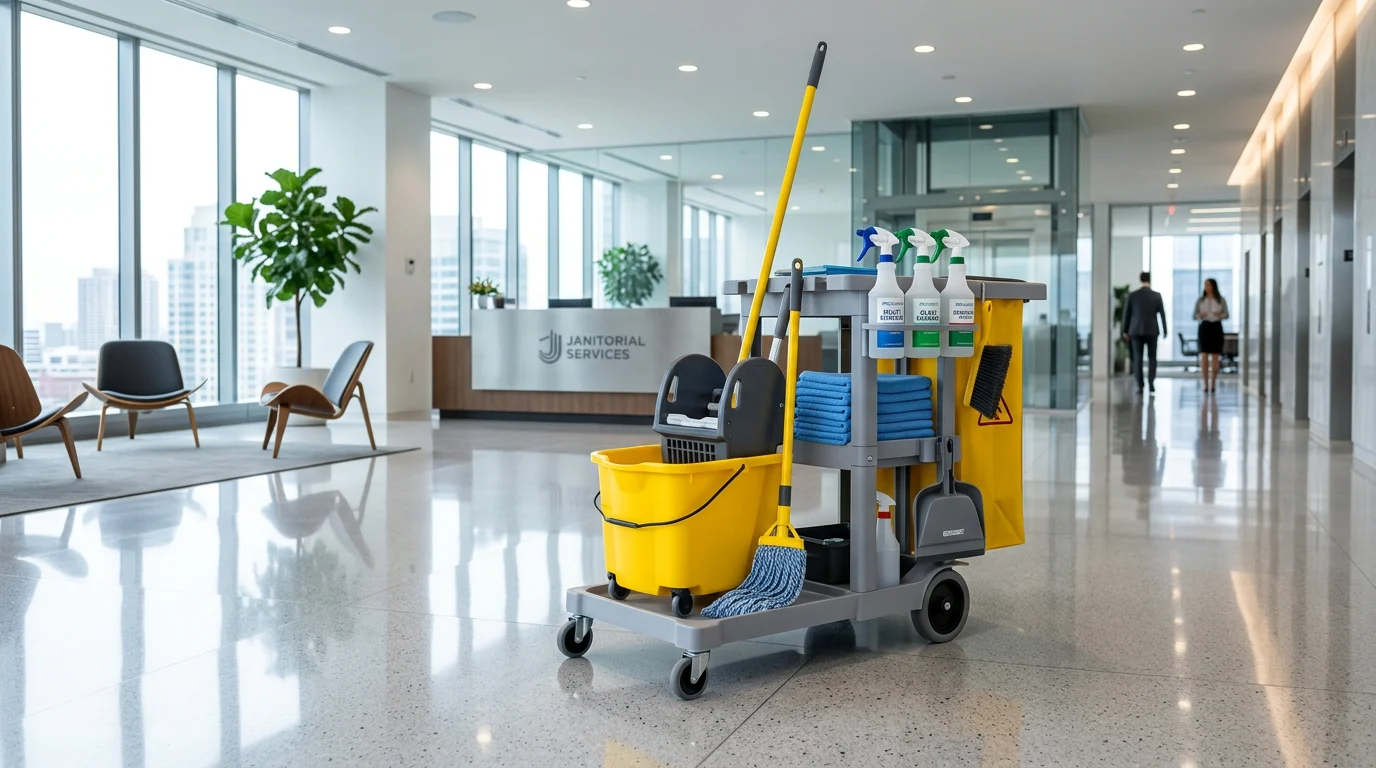
Janitorial Cleaning Covers the Routine Work That Keeps a Facility Running
Janitorial services are usually ongoing. The goal is to keep the workplace clean, usable, and presentable through scheduled maintenance rather than waiting for dirt and buildup to become a larger problem.
The exact schedule depends on the property. A busy office may need service every day, while a smaller workplace may only need cleaning several times each week.
Common Janitorial Tasks
Routine janitorial work often includes:
- Emptying trash and replacing liners
- Cleaning restrooms
- Restocking paper and soap products
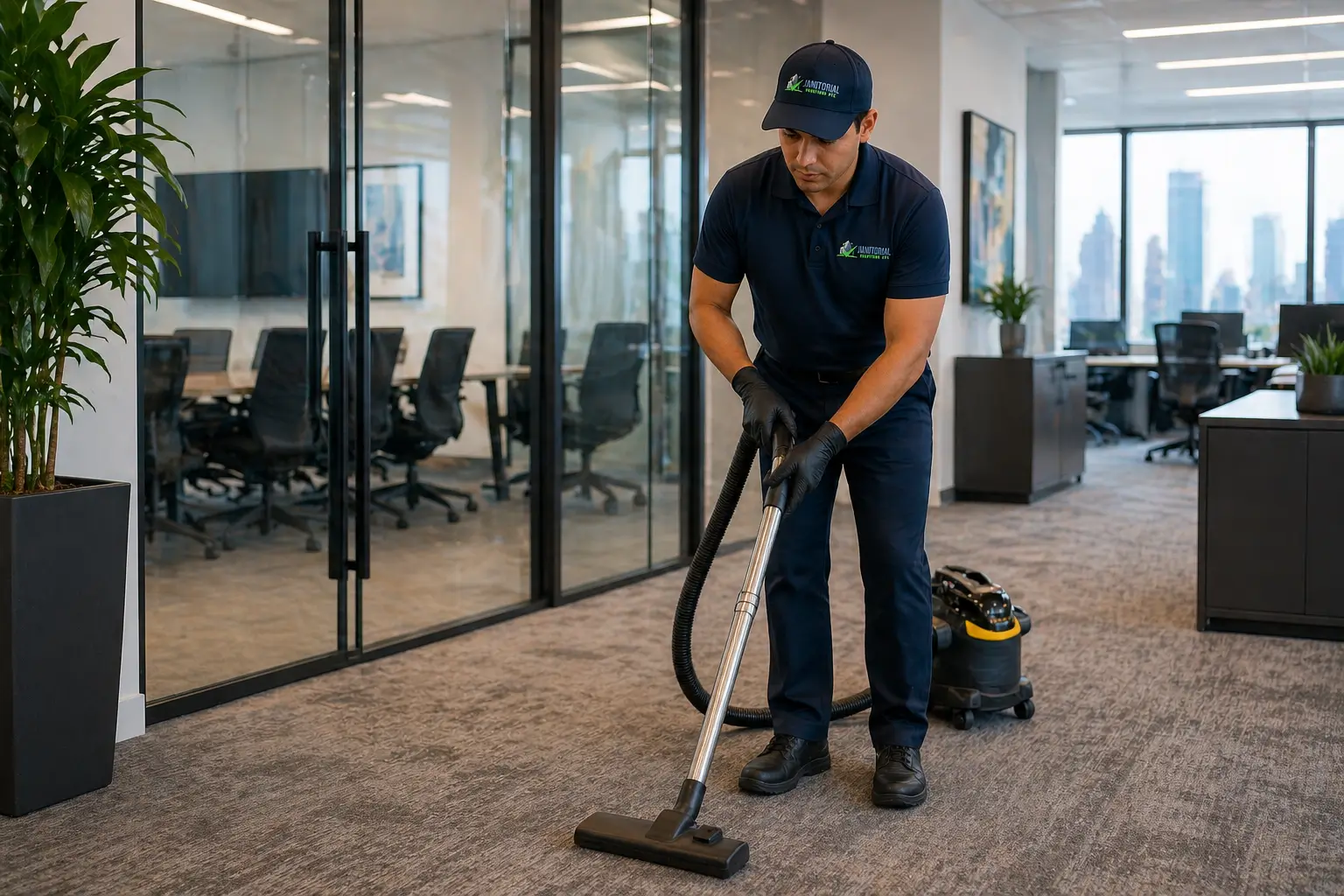
- Vacuuming carpets
- Sweeping and mopping hard floors
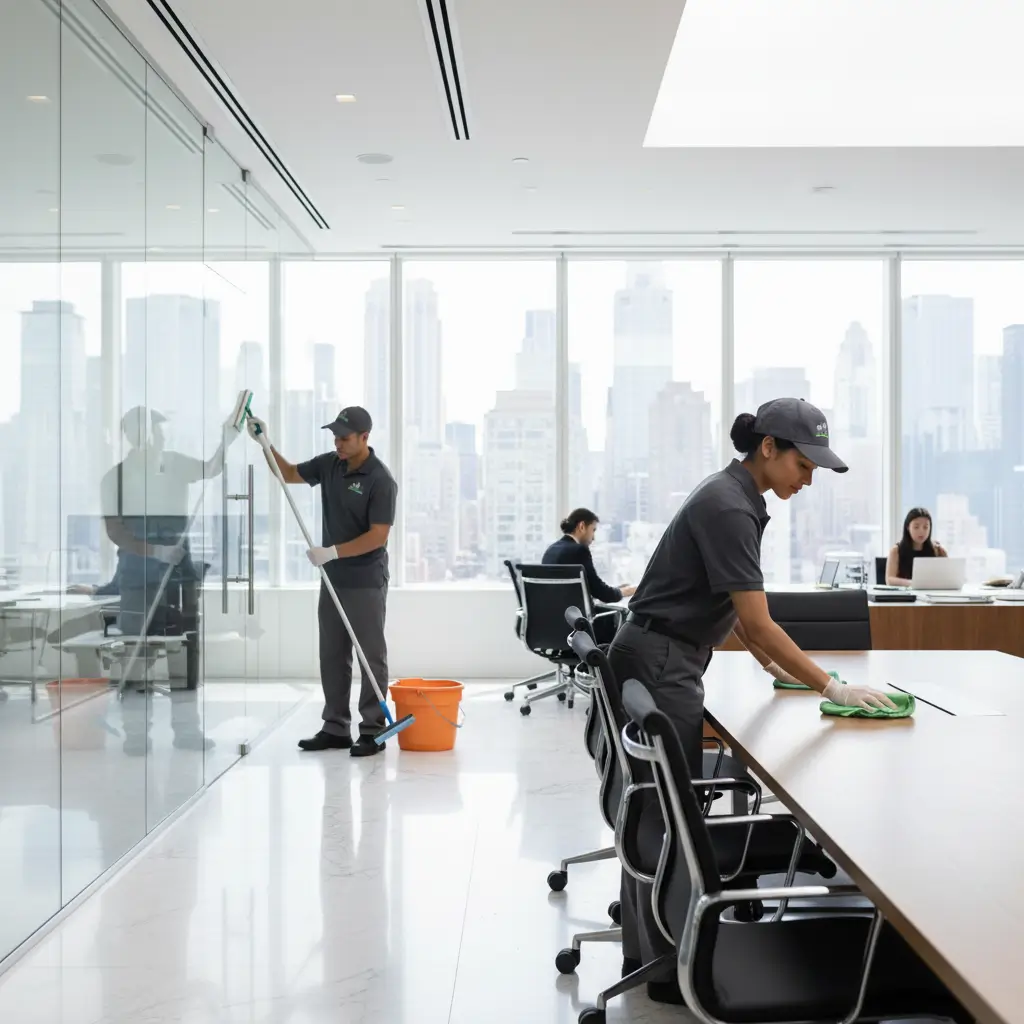
- Wiping desks and accessible surfaces
- Cleaning break rooms
- Cleaning high-touch areas
- Spot-cleaning glass
- Dusting furniture and fixtures
These are repetitive tasks because the same areas become dirty again through normal use.
A restroom cleaned Monday will still need attention Tuesday. Trash bins refill. Entry floors collect more debris. Shared kitchens develop new spills. Janitorial cleaning is built around that cycle.
Commercial Cleaning Is a Broader Service Category
Commercial cleaning refers to cleaning performed for businesses and commercial properties rather than homes. It can include everyday janitorial maintenance, but the term also covers services that are not needed every day.
A commercial property might use janitorial staff for routine cleaning and then schedule additional work throughout the year.
Commercial Cleaning Can Include:
- Daily or weekly janitorial cleaning
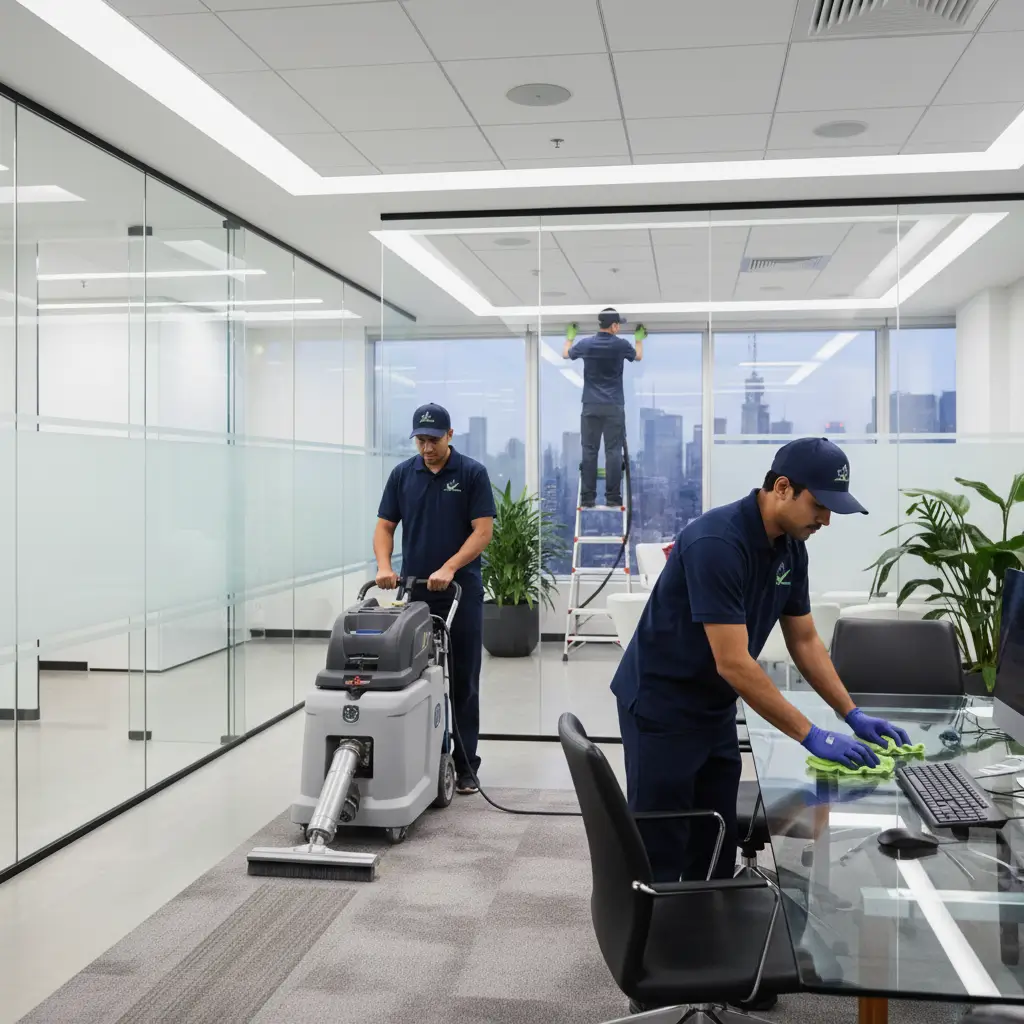
- Carpet cleaning
- Floor cleaning and maintenance
- Upholstery cleaning
- Window cleaning
- Post-construction cleaning
- Move-in or move-out cleaning
- Deep cleaning
- Retail cleaning
- Restaurant cleaning
- Building common-area cleaning
That makes commercial cleaning in NYC the larger category, while janitorial work is one part of it.
The terminology can vary between cleaning companies, so businesses should focus on the scope rather than assuming a service includes certain tasks because of its name.
Janitorial Cleaning vs Commercial Cleaning at a Glance
The simplest way to understand the difference is to compare how each service is normally used.
| Factor | Janitorial Cleaning | Commercial Cleaning |
| Main purpose | Ongoing facility upkeep | Routine and specialized business cleaning |
| Typical frequency | Daily, several times weekly, weekly | Routine or periodic depending on service |
| Common work | Trash, restrooms, floors, desks, shared areas | Janitorial work plus carpets, windows, deep cleaning, floor care and specialty projects |
| Best for | Maintaining everyday cleanliness | Maintaining and restoring different areas of a commercial property |
| Planning style | Recurring cleaning schedule | Recurring schedule plus planned specialty services |
| Scope | Usually maintenance-focused | Broader and may include deeper project-based cleaning |
The important difference is not that one is “better.” They solve different cleaning problems.
Think of Janitorial Services as Maintenance
A useful comparison is building maintenance.
You would not wait until every light in a building stops working before replacing bulbs, and you would not wait for trash to overflow before emptying bins. Routine maintenance prevents everyday issues from becoming larger ones.
Janitorial services work in the same way.
They keep dirt, waste, restroom use, floor debris, fingerprints, and common-area mess under control through repeated service. Without that routine, a commercial property can decline quickly even if it receives occasional deep cleaning.
Janitorial Cleaning Usually Handles High-Frequency Needs
Areas that may need recurring attention include:
- Restrooms
- Entrances
- Reception areas
- Break rooms
- Office floors
- Shared desks
- Meeting rooms
- Elevators
- Common corridors
- Waste areas
The frequency should follow use. CDC guidance for facilities recommends cleaning high-touch surfaces regularly and increasing cleaning frequency in high-traffic spaces where needed.
This is why a large Midtown office and a small private suite should not automatically receive the same schedule.
Commercial Cleaning Handles Work Outside the Daily Routine
Some surfaces become dirty slowly rather than every day. Others need equipment or techniques that do not belong in a basic janitorial shift.
This is where broader commercial cleaning services become useful.
Carpet Cleaning
Routine vacuuming removes loose dirt, but it cannot remove every soil deposit or stain embedded in carpet fibers.
Scheduled carpet cleaning may be needed when traffic lanes become visible, spills remain after spot treatment, or the carpet begins to look dull despite regular vacuuming.
Floor Cleaning and Periodic Maintenance
Daily sweeping and mopping are maintenance tasks. More involved floor cleaning may require machine scrubbing, polishing, or another treatment depending on the flooring material and condition.
That work is usually performed periodically rather than during every janitorial visit.
Post-Construction Cleaning
Construction dust spreads differently from normal office dirt. Fine dust can settle on fixtures, ledges, vents, floors, windows, and other surfaces after renovation work.
A commercial post-construction service is therefore a project with a clear beginning and end rather than part of everyday janitorial maintenance.
The Same Cleaning Company May Provide Both
Businesses do not necessarily need two separate companies.
A commercial cleaning provider may handle routine janitorial services and also perform scheduled specialty work when required. In fact, using one provider can make it easier to coordinate which tasks belong in the regular schedule and which should be planned separately.
The key is to make the scope clear.
For example, a contract might include daily restroom cleaning and floor maintenance but exclude quarterly carpet extraction. If the business assumes carpet cleaning is automatically included because the provider offers “commercial cleaning,” there can be a gap between expectation and actual service.
Ask for a written checklist that explains:
- What is included during every visit.
- Which tasks happen weekly or monthly.
- Which specialized services cost extra.
- Which supplies are included.
- What happens when additional cleaning is requested.
This is more useful than choosing a provider based only on the service name.
Which Businesses Usually Need Janitorial Services?
Any business with ongoing employee or customer traffic can benefit from recurring cleaning.
The greater the daily use of the property, the more important scheduled janitorial work becomes.
Offices and Coworking Spaces
Workplaces generate daily trash, restroom use, floor traffic, fingerprints, kitchen mess, and dust. Coworking spaces can need even more frequent attention because many people share desks, lounges, kitchens, and meeting rooms.
Retail Stores
Retail facilities need floors, fitting areas, counters, glass, restrooms, and entrances maintained while customers continue moving through the space.
Commercial Buildings
Lobbies, elevators, stairwells, corridors, loading areas, and shared restrooms often require recurring attention regardless of what individual tenants handle inside their own suites.
Restaurants and Food Businesses
Restaurants combine front-of-house presentation with food waste, grease, floors, restrooms, and high guest traffic. Cleaning frequency can therefore be higher than in a low-traffic office.
Medical Offices
Medical environments have different cleaning and disinfection needs from general offices. They may require specific protocols based on the type of facility, patient care, surface risk, and applicable health standards.
CDC guidance also distinguishes between cleaning and disinfecting. Cleaning removes dirt and reduces germs, while disinfecting is used to kill remaining germs after cleaning when needed.
Which Businesses Need Broader Commercial Cleaning?
The answer is often the same businesses, but at different points in their maintenance cycle.
An office that receives janitorial cleaning five nights each week may still need carpet cleaning several times a year. A retail store may need daily cleaning but schedule floor treatment after months of customer traffic. A renovated business may require post-construction cleaning before employees return.
Commercial Cleaning Becomes More Important When:
- Carpet looks dirty despite regular vacuuming.
- Hard floors lose their finish.
- Windows develop visible buildup.
- Furniture and upholstery need deeper cleaning.
- Renovation or construction has created dust.
- A business is preparing to move in or out.
- A facility has areas that fall outside the normal janitorial checklist.
These jobs are usually less frequent but more involved.
That is why facility managers should not view routine and specialty cleaning as competing options. They work together.
Frequency Is One of the Biggest Differences
Janitorial cleaning is based on recurrence.
Commercial cleaning may be recurring too, but specialty services are often scheduled according to condition, traffic, or operational needs.
A simple schedule might look like this:
Daily or Several Times Per Week
- Trash removal
- Restroom cleaning
- High-touch surface cleaning
- Break-room cleaning
- Vacuuming
- Sweeping and mopping
- Lobby maintenance
Weekly or Biweekly
- More detailed dusting
- Glass and partition cleaning
- Low-use areas
- Floor edges
- Furniture details
Monthly or Periodic
- Carpet deep cleaning
- Floor treatment
- Upholstery cleaning
- Window cleaning
- High dusting
- Post-renovation work
- Deep cleaning
There is no universal frequency for every property. CDC guidance recommends considering how often surfaces are touched and whether the area has heavy traffic when deciding cleaning frequency.
Janitorial Cleaning Is Not the Same as Deep Cleaning
One common source of confusion is expecting routine janitorial staff to deep clean every part of the facility during every visit.
That is rarely practical.
A janitorial shift may be focused on emptying bins, cleaning restrooms, vacuuming, mopping, wiping surfaces, and resetting common areas. Adding carpet extraction, machine floor care, interior window washing, and detailed high dusting to the same visit changes both the time and equipment needed.
Deep cleaning should therefore be scheduled intentionally.
When Deeper Cleaning May Be Needed
Look for conditions such as:
- Soil remaining after normal cleaning
- Dark carpet traffic lanes
- Grout discoloration
- Dust on high surfaces
- Marks on walls and partitions
- Upholstery stains
- Floor finish wear
- Construction dust
- Areas that are difficult to reach during routine visits
This approach keeps the daily service focused while making sure neglected areas do not continue accumulating buildup.
Cleaning and Disinfecting Should Not Be Confused With Service Type
“Janitorial,” “commercial,” “cleaning,” and “disinfecting” describe different things.
Janitorial and commercial describe the type or scope of service. Cleaning and disinfecting describe what is being done to a surface.
CDC defines cleaning as using soap or detergent to remove dirt and reduce germs. Disinfecting uses chemical products to kill remaining germs after cleaning. In most general facility situations, regular cleaning is enough for many surfaces, while disinfection may be appropriate when someone has been ill or when conditions call for additional measures.
That means a janitorial team may clean most areas and disinfect selected surfaces when required. A commercial deep-cleaning project may also involve both cleaning and disinfection depending on the property.
How to Decide Which Service Your Business Needs
Instead of choosing between two labels, start with the problems inside the facility.
Choose Recurring Janitorial Services If:
- Trash fills regularly.
- Restrooms need ongoing attention.
- Employees use shared kitchens.
- Floors collect daily dirt.
- Customers visit the property.
- Your current staff is handling cleaning themselves.
- The space needs to be reset before each business day.
Add Broader Commercial Cleaning If:
- Carpets need extraction.
- Floors need deeper treatment.
- Windows require scheduled cleaning.
- Renovation has created dust and debris.
- Upholstery needs attention.
- A move requires a detailed clean.
- Routine service is not enough to restore certain areas.
Many businesses need both.
The more useful question is usually, “Which tasks need recurring janitorial attention, and which commercial cleaning projects should be scheduled separately?”
Build the Cleaning Plan Around Foot Traffic, Not Just Square Footage
A large warehouse office with 20 employees may need less daily interior cleaning than a smaller retail store serving hundreds of customers.
Square footage affects cleaning time, but it does not tell the entire story.
A cleaning plan should consider:
- Employee count
- Visitor volume
- Hours of operation
- Restroom use
- Number of shared spaces
- Flooring type
- Food areas
- Industry
- Seasonal dirt
- Customer-facing areas
High-touch areas should also receive greater attention than surfaces that people rarely handle. CDC guidance specifically points to surfaces such as door handles, elevator buttons, touchpads, counters, desks, restroom fixtures, and stair rails as examples that may need regular cleaning. (CDC)
A walkthrough before quoting service can therefore be more useful than pricing based only on total square feet.
Ask These Questions Before Signing a Cleaning Contract
The difference between janitorial and commercial cleaning matters less when the contract clearly describes the work.
Before hiring a company, ask:
What Happens During Every Visit?
You should know whether trash, restrooms, desks, floors, kitchens, and shared areas are included.
Which Tasks Are Periodic?
Ask whether carpets, windows, upholstery, floors, and high dusting have their own schedule.
How Is Cleaning Frequency Decided?
A good schedule should reflect traffic and facility use rather than forcing every customer into the same plan.
Can the Scope Change?
Business needs change. A growing office, new tenant, renovation, or seasonal traffic increase may require a different frequency.
Is There a Written Checklist?
A checklist helps both the business and cleaning team understand what should be completed.
One Facility Can Need Different Cleaning Services at the Same Time
Consider a typical office.
The restrooms may need daily cleaning. The carpets may need routine vacuuming but only periodic extraction. Interior glass may need weekly attention. Floors at the entrance may need more frequent care than floors inside private offices.
That does not mean the cleaning plan is inconsistent.
It means the property is being maintained according to actual use.
A good commercial cleaning plan combines frequencies instead of applying the same task list to every surface.
Choose the Cleaning Scope Before You Choose the Service Name
The difference between janitorial services and commercial cleaning in NYC becomes much easier to understand once you stop treating them as competing services. Janitorial cleaning handles the recurring work that keeps a workplace usable every day, while commercial cleaning is the broader category that can include routine maintenance along with deeper and specialized services.
Janitorial Solutions NYC provides commercial and janitorial cleaning for offices, medical facilities, restaurants, retail stores, coworking spaces, and commercial buildings across Manhattan, Brooklyn, Queens, and the Bronx. Its listed services include routine janitorial cleaning as well as floor, carpet, upholstery, window, post-construction, building, and industry-specific cleaning. If your facility needs a mix of recurring maintenance and periodic deeper work, contact Janitorial Solutions NYC to build a cleaning schedule around the property instead of relying on a generic service label.