A five-person office used three days per week does not need the same cleaning schedule as a busy medical office, retail store, coworking space, or commercial building. Paying for daily cleaning when the workplace barely gets dirty can waste money. Waiting a full week in a high-traffic facility can leave trash, floors, restrooms, and shared spaces falling behind.
The right frequency for cleaning services in NYC depends on how quickly the property becomes dirty. Daily janitorial cleaning usually works better for busy workplaces, while weekly cleaning can be enough for smaller, lower-traffic offices. Many businesses fall somewhere between the two and benefit from a customized schedule.
Daily vs Weekly Janitorial Cleaning: What Is the Main Difference?
The difference is not only the number of visits.
Daily cleaning is intended to reset the workplace after each business day or operating shift. It prevents routine mess from carrying into the next day.
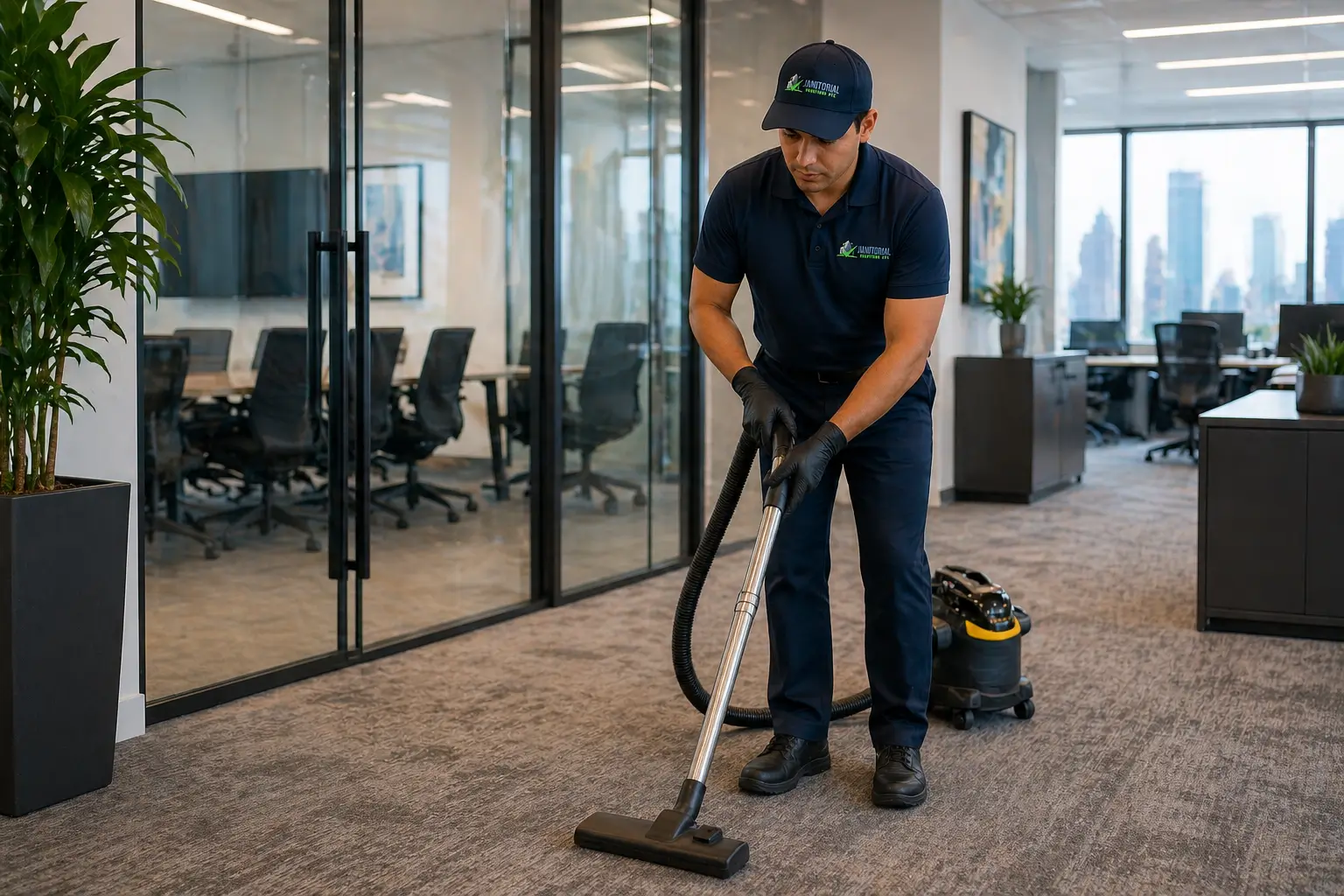
Typical daily work may include trash removal, restroom cleaning, floor vacuuming or mopping, break-room cleaning, and attention to high-contact areas.
Weekly cleaning allows several days of normal use to accumulate before the janitorial crew completes those tasks.
That can work when only a few employees use the space and customer traffic is limited.
It becomes less practical when forty employees share two restrooms, clients move through a lobby throughout the day, or food and drinks are used in common areas.
There is no federal rule stating that every office must be cleaned daily. OSHA instead requires workplaces, passageways, storerooms, service rooms, and walking-working surfaces to remain clean, orderly, and sanitary. Floors must also be maintained in a clean and, as far as feasible, dry condition.
The cleaning schedule needs to be frequent enough to maintain that condition.
When Are Daily Cleaning Services Better for an NYC Business?
Daily cleaning makes the most sense when the facility creates enough mess during one operating day that leaving it until later would affect the next day.
This often applies to businesses with:
- Large employee populations
- Daily customer or visitor traffic
- Shared restrooms
- Break rooms or kitchens
- High-use entrances
- Elevators and common corridors
- Food or beverage service
- Multiple work shifts
- Frequent deliveries
- Shared desks or equipment
A busy office can fill waste bins each day. Restrooms may need attention before employees return the next morning. Entrance floors can collect street dirt and moisture during one commute period.
CDC guidance for general community facilities such as offices and businesses recommends cleaning high-touch surfaces regularly and cleaning other surfaces when visibly dirty. It also says high-traffic areas may need more frequent cleaning.
That principle is more useful than choosing a schedule simply because another business uses it.
Weekly Office Cleaning Can Work for Low-Traffic Workplaces
Weekly cleaning is not automatically too little.
A small professional office with a handful of employees, limited visitors, no public restroom, and little food preparation may remain manageable between weekly visits.
Examples can include small consulting firms, private administrative offices, appointment-only businesses, or workplaces operating on hybrid schedules.
A weekly plan may include:
Vacuuming or mopping floors, dusting, cleaning the restroom, wiping common surfaces, removing accumulated trash, and cleaning the kitchen or break area.
The business may still need employees to handle spills and overflowing trash between professional visits.
Weekly cleaning works best when the workplace remains presentable throughout the week rather than becoming noticeably dirty two or three days before the next service.
If that keeps happening, the interval is probably too long.
Foot Traffic Should Determine Commercial Cleaning Frequency
Square footage tells you how much space needs cleaning.
Traffic tells you how quickly it becomes dirty.
A 2,000-square-foot retail store serving hundreds of customers can need more cleaning than a 5,000-square-foot office used by fifteen employees.
Entrances are particularly important in New York City.
People track in soil, moisture, grit, and street debris throughout the day. Weather can change the amount quickly.
High-use areas such as reception spaces, elevator banks, hallways, checkout areas, and shared work zones can therefore justify daily cleaning even when quieter parts of the same building do not.
A useful commercial cleaning frequency plan divides the property into zones rather than assuming every room needs the same schedule.
That can control cost while still giving busy areas enough attention.
Restroom Use Can Decide Between Daily and Weekly Cleaning
Restrooms often determine whether weekly cleaning is practical.
A restroom used by three employees will not develop the same cleaning needs as one shared by fifty employees and visiting customers.
Waste bins fill. Soap and paper supplies run low. Floors become marked. Fixtures collect visible use.
If several people use the restroom throughout every business day, waiting a week for professional cleaning is often difficult to justify.
The same applies to public-facing restrooms.
A customer who sees a dirty restroom does not know that the janitorial crew is scheduled for Friday. They only see the condition during their visit.
Businesses with heavily used facilities should consider daily restroom cleaning even if some office areas can remain on a lighter schedule.
Break Rooms and Shared Kitchens Can Need Daily Janitorial Cleaning
Food changes the cleaning equation.
Coffee spills, crumbs, food containers, sinks, tables, countertops, microwave handles, refrigerators, and trash can create noticeable mess during a single day.
A workplace with a kitchen used by many employees may therefore benefit from daily service.
A smaller office where two people make coffee and eat lunch at their desks may not.
CDC recommends considering how frequently surfaces are touched when planning cleaning and notes that high-touch surfaces need regular attention.
For a busy workplace, an office cleaning in NYC schedule can give shared areas more frequent service while leaving lower-use private offices on another cycle.
The entire office does not need to receive the same level of attention every day.
Customer-Facing Businesses Usually Need More Frequent Cleaning
A private back office can become slightly dusty without affecting customers.
A storefront, lobby, salon, showroom, restaurant, clinic, or professional reception area has less room for that delay.
Customer-facing spaces influence how people experience the business.
Fingerprints on entrance glass, full trash bins, marked floors, debris near the reception area, or a neglected restroom become visible quickly.
This often makes daily cleaning more practical.
It does not mean every deep-cleaning task needs to happen every night.
Routine cleaning and deep cleaning should follow separate schedules.
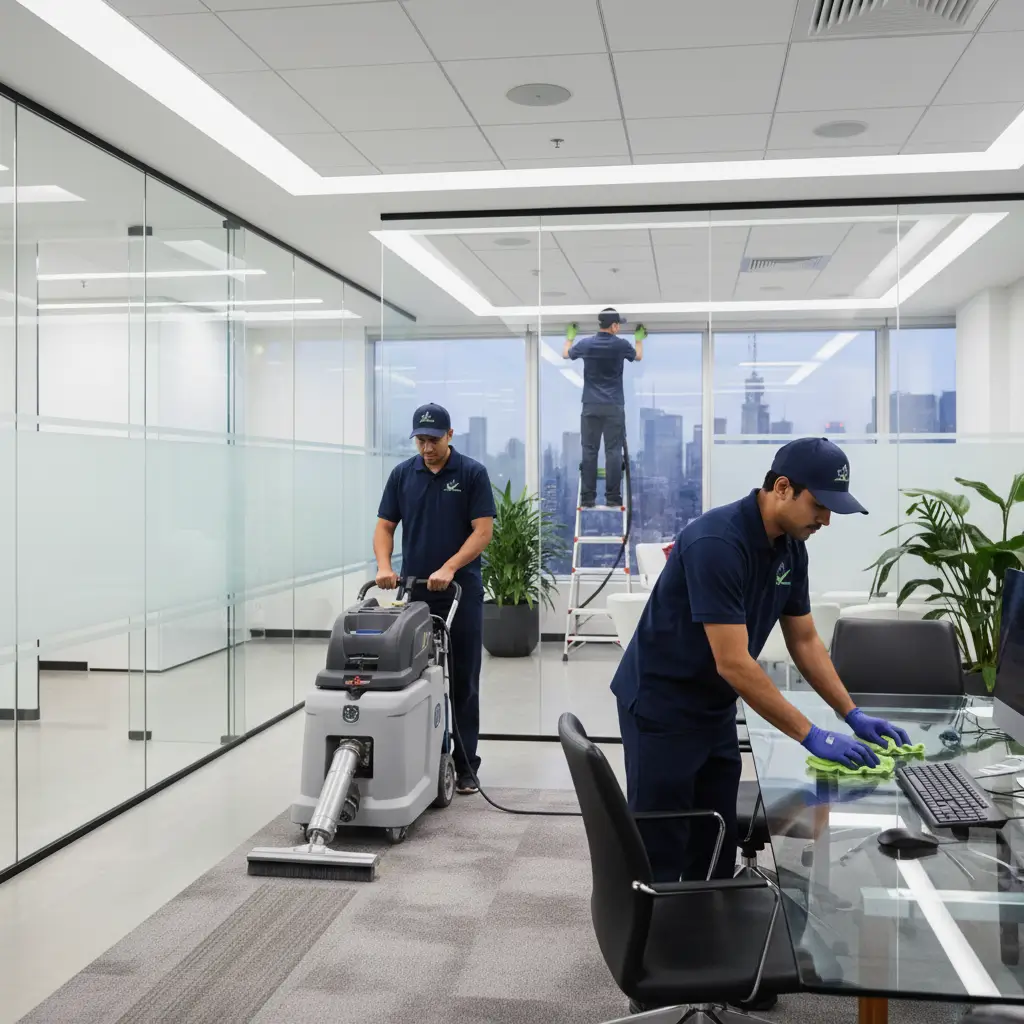
The daily visit may handle visible soil and recurring tasks. Carpet extraction, detailed floor work, upholstery cleaning, high dusting, and other deeper services can happen periodically.
Weekly Cleaning Costs Less, but Only If the Schedule Keeps Up
Weekly janitorial cleaning can reduce the number of professional visits.
That can make it attractive to small businesses managing a limited cleaning budget.
The lowest number of visits is not always the lowest operational cost, though.
If employees begin vacuuming, taking out large amounts of trash, cleaning restrooms, and mopping floors between scheduled visits, the business has shifted the cleaning cost onto employee time.
A receptionist or office manager cleaning for thirty minutes several times per week is still using paid labor.
The business should compare:
Professional cleaning cost versus employee time, cleaning supplies, equipment, supervision, and the quality of the result.
If staff only need to wipe an occasional spill, a weekly schedule can work well.
If janitorial tasks have become an unofficial part of several employees’ jobs, professional visits may need to increase.
Daily Cleaning Does Not Mean Every Task Happens Every Day
This is one of the most important distinctions when building a janitorial plan.
A daily cleaning contract does not need to mean deep cleaning the carpet, washing every window, and dusting every high surface each night.
Tasks can be divided by frequency.
- Daily tasks may include:
Trash removal, restroom cleaning, high-use floor care, kitchen cleaning, and selected high-touch surfaces.
- Weekly tasks may include:
Detailed dusting, lower-traffic areas, interior glass, edge cleaning, and other work that does not need nightly attention.
- Periodic tasks may include:
Carpet extraction, upholstery cleaning, detailed floor treatment, high dusting, or window cleaning.
A mixed schedule can deliver daily maintenance without paying to repeat tasks before they need attention.
Medical and Food-Service Facilities Need Their Own Cleaning Schedules
Some businesses should not choose between daily and weekly service based only on appearance or budget.
Healthcare and food-service environments can have facility-specific cleaning, disinfection, and sanitation requirements.
CDC’s general facility cleaning guidance specifically states that its basic recommendations for offices and community businesses do not replace the specialized requirements that can apply in healthcare, food preparation, manufacturing, childcare, and other regulated settings.
Healthcare guidance also uses risk to determine cleaning frequency, with some patient-care spaces and toilets requiring at least daily cleaning or more frequent attention depending on use.
These facilities should develop their schedule around the applicable rules and operating risks rather than copying the cleaning plan of a standard office.
Building Common Areas Often Need Daily Attention
Commercial and residential buildings can have another cleaning pattern.
Hundreds of people may pass through the lobby and elevators while individual corridors receive much less use.
The entrance floor may need daily maintenance while other areas can follow a weekly schedule.
Common spaces that can justify more frequent service include:
Lobbies, elevator interiors, elevator buttons, entrance glass, mail areas, stairwells, trash rooms, and shared restrooms.
A building cleaning service in NYC can therefore be structured around traffic patterns instead of one identical frequency throughout the property.
This is often the most efficient way to maintain larger buildings.
A Hybrid Janitorial Schedule Is Often Better Than Choosing One Extreme
Many NYC businesses do not need to choose strictly between daily and weekly cleaning.
A hybrid plan can work better.
For example, an office could receive full professional cleaning three nights per week while high-use trash and restroom areas receive additional attention as needed.
Another property might use daily janitorial service for common spaces but clean private offices less frequently.
The right schedule answers one question:
How long can each area go between cleanings without dropping below the condition the business expects?
If the answer is one day for the restroom and five days for a conference room, the cleaning plan should reflect that difference.
Review Your Janitorial Schedule as the Business Changes
The cleaning frequency that works today may not work next year.
A company can add employees, move to hybrid work, receive more customers, expand operating hours, or begin using another part of the building.
Seasonal conditions can also affect floors and entrances.
Review the schedule when:
Employee count changes, customer traffic increases, operating hours expand, complaints increase, trash begins overflowing, restrooms need attention between visits, or floors look dirty before the next cleaning.
Cleaning frequency should respond to the facility rather than remain unchanged simply because that was the original contract.
Choose Cleaning Services in NYC Based on How Fast Your Workplace Gets Dirty
Daily cleaning is usually better for high-traffic offices, retail stores, restaurants, busy buildings, and workplaces with heavily used restrooms or shared areas. Weekly cleaning can be enough for small, low-occupancy offices where professional cleaning still keeps the property in good condition throughout the week. For many businesses, the better answer is a customized schedule that gives busy zones more frequent attention than low-use areas.
Janitorial Solutions NYC provides cleaning services in NYC for offices, commercial buildings, restaurants, coworking spaces, medical offices, retail properties, and other facilities, with daily, weekly, bi-weekly, after-hours, and overnight scheduling options available based on facility needs. If your workplace looks clean after service but starts falling behind several days before the next visit, contact Janitorial Solutions NYC to build a cleaning schedule around actual traffic and use rather than forcing the business into a daily or weekly package.