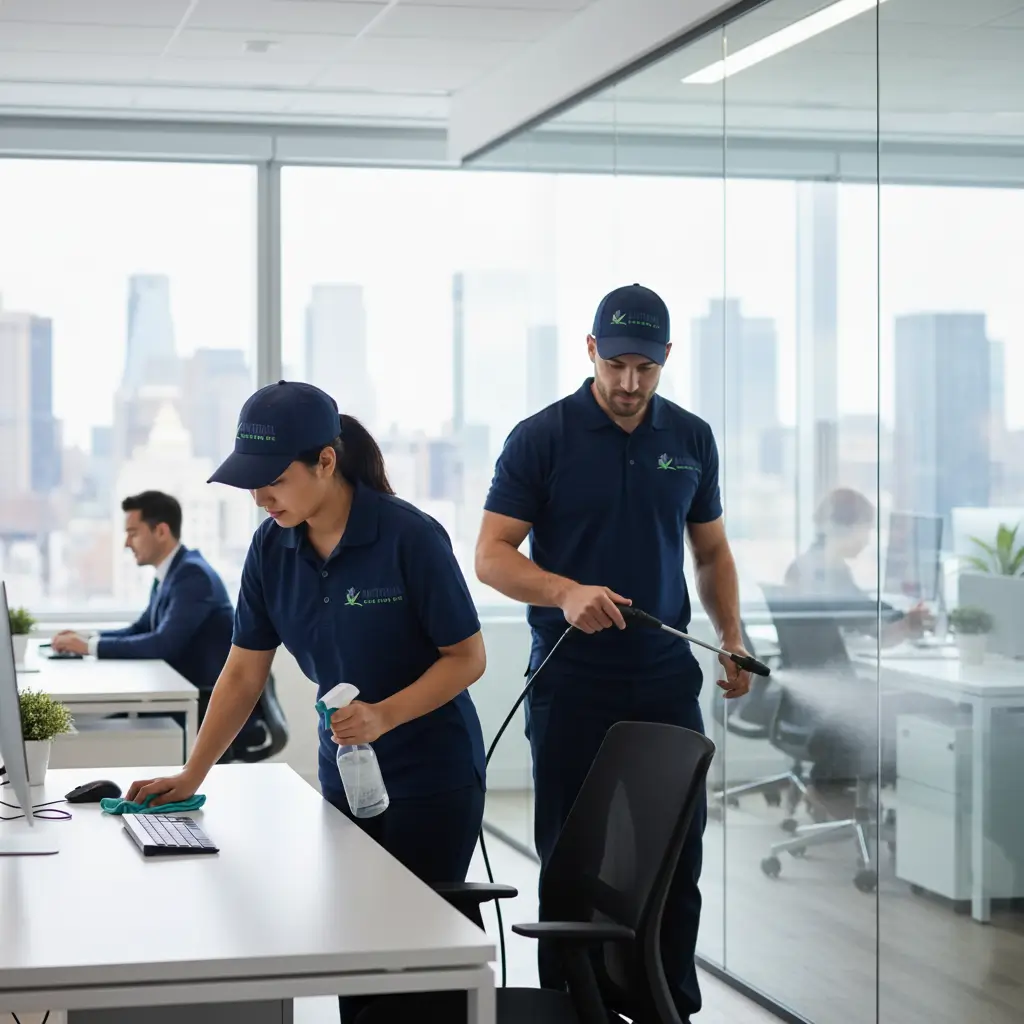
Cleaning an office sounds straightforward until you try to estimate how long the work will actually take. A 10,000-square-foot office with open workstations, two restrooms, a kitchen, and low foot traffic does not require the same amount of labor as a 10,000-square-foot office with multiple conference rooms, private offices, busy restrooms, and a high-traffic lobby.
That is why there is no reliable one-size-fits-all answer to how long commercial office cleaning takes.
Industry cleaning standards use production rates and task-based measurements to estimate labor. ISSA, the worldwide cleaning industry association, explains that cleaning times depend on the specific task, tools, total area or fixtures, and training involved. APPA also notes that staffing calculations need to account for the type of space, cleaning tasks, frequency, and expected appearance level rather than relying on square footage alone.
For businesses comparing Commercial cleaners in NYC, janitorial services, understanding these factors can make it easier to evaluate a cleaning schedule and determine whether a proposed service plan actually matches the property.
How Long Does Commercial Office Cleaning Usually Take?
The answer depends on the size and layout of the office, the number of people using the space, the condition of the facility, and the cleaning tasks included in the scope.
A small office may be cleaned by one person during a single visit, while a large commercial floor may require several cleaners working at the same time. A routine maintenance visit can also take considerably less time than a first-time deep cleaning.
For example, an office with mostly open floor space can be relatively efficient to clean because one person can vacuum or mop a large continuous area. An office divided into numerous private rooms may require more time because cleaners must move between spaces and perform additional tasks.
Restrooms, kitchens, conference rooms, entrances, and high-traffic areas can also increase the total labor required.
The table below illustrates why office size alone does not determine cleaning time.
| Office Situation | Main Factors Affecting Time | Typical Cleaning Approach |
|---|---|---|
| Small office with light traffic | Limited rooms, few employees, low waste volume | Routine cleaning during a short scheduled visit |
| Medium office with standard traffic | Multiple work areas, restrooms, kitchen, conference rooms | Recurring cleaning with several task categories |
| Large open-plan office | Large floor area, more workstations, higher waste volume | Multiple cleaners or longer service window |
| Multi-room office | Private offices, conference rooms, corridors, kitchens | More movement between areas and individual tasks |
| High-traffic office | Frequent restroom use, more waste, heavily used entrances | More labor and potentially more frequent service |
| Office requiring deep cleaning | Built-up dirt, carpet care, detailed surface cleaning | Longer or separately scheduled cleaning visit |
These are planning categories, not fixed time guarantees. ISSA advises using established cleaning-time benchmarks as a starting point for estimating work rather than treating them as exact time-motion measurements.
What Determines How Long an Office Takes to Clean?
Several factors can change the amount of time required for the same amount of floor space.
1. Square Footage
Square footage is one of the first measurements a cleaning company considers, but it should not be the only one.
A larger office generally requires more cleaning labor because there are more floors, surfaces, fixtures, and occupied areas to maintain. However, two offices with the same square footage can have very different cleaning requirements.
For example, 20,000 square feet of open workspace may be easier to clean than 20,000 square feet divided into numerous offices, meeting rooms, corridors, kitchens, and other areas.
Industry staffing models often use square footage as one part of the calculation, then adjust the estimate based on the characteristics of the facility. APPA describes approaches that consider room types, tasks, cleaning frequency, and expected appearance levels.
2. Number of Employees
Employee numbers affect how quickly an office becomes dirty.
More employees usually mean more restroom usage, more food and drink consumption, more trash, more fingerprints on shared surfaces, and greater use of conference rooms and common areas.
An office with 50 employees and an office with 200 employees could have the same floor area but require different cleaning schedules because the daily usage is different.
3. Office Layout
The physical layout has a major effect on productivity.
Open-plan offices generally allow cleaners to move through large areas efficiently. Private offices, cubicles, storage rooms, meeting rooms, narrow corridors, and multiple entrances require more movement and individual attention.
Furniture placement matters too. Crowded work areas can take longer to vacuum and dust than open spaces with clear floor paths.
4. Number of Restrooms
Restroom cleaning is not measured simply by square footage.
The number of toilets, urinals, sinks, partitions, dispensers, mirrors, and other fixtures affects the labor required. Restrooms also require several separate steps, including cleaning fixtures, disinfecting appropriate surfaces, replenishing supplies, removing waste, and cleaning floors.
ISSA’s cleaning-time methodology includes fixture-based calculations for restrooms because the number of fixtures can provide a more useful measure than floor area alone.
5. Kitchens and Breakrooms
A small employee kitchenette may only need routine surface and floor cleaning. A larger breakroom with several appliances, dining tables, refrigerators, sinks, and heavy daily use can require substantially more work.
The cleaning scope should identify whether appliances such as microwaves, refrigerators, coffee machines, and other equipment are included.
6. Foot Traffic
Foot traffic directly affects floors, entrances, elevators, restrooms, and common areas.
A downtown NYC office with employees and visitors coming and going throughout the day can accumulate more soil than a low-traffic office with a smaller workforce.
Entrance areas may need particular attention because dirt and moisture are brought inside from sidewalks and streets.
7. Current Condition of the Office
A regularly maintained office usually takes less time to clean than a property that has gone several weeks without professional service.
Heavy dust, accumulated trash, stained floors, neglected restrooms, built-up grease, and neglected surfaces can turn a routine cleaning visit into a more intensive project.
This is one reason an initial deep cleaning may take longer than subsequent recurring visits.
How Cleaning Tasks Affect the Time Required
Not every cleaning task uses time in the same way.
Some tasks are measured by square footage, while others depend on the number of fixtures, rooms, surfaces, or individual items.
For example, vacuuming a large open carpeted area can be measured by the area cleaned. Restroom cleaning may be more accurately estimated from the number of fixtures and the required cleaning steps.
Dusting a large number of private offices can also take longer than cleaning the same amount of open workspace because cleaners have more individual surfaces and rooms to handle.
ISSA’s cleaning-time guidance uses task-specific production rates and bundled cleaning processes to help estimate labor requirements.
How Long Does a Routine Office Cleaning Visit Take?
A routine cleaning visit can range from a relatively short service window for a small office to several hours or multiple cleaners for a larger facility.
A typical recurring visit may include:
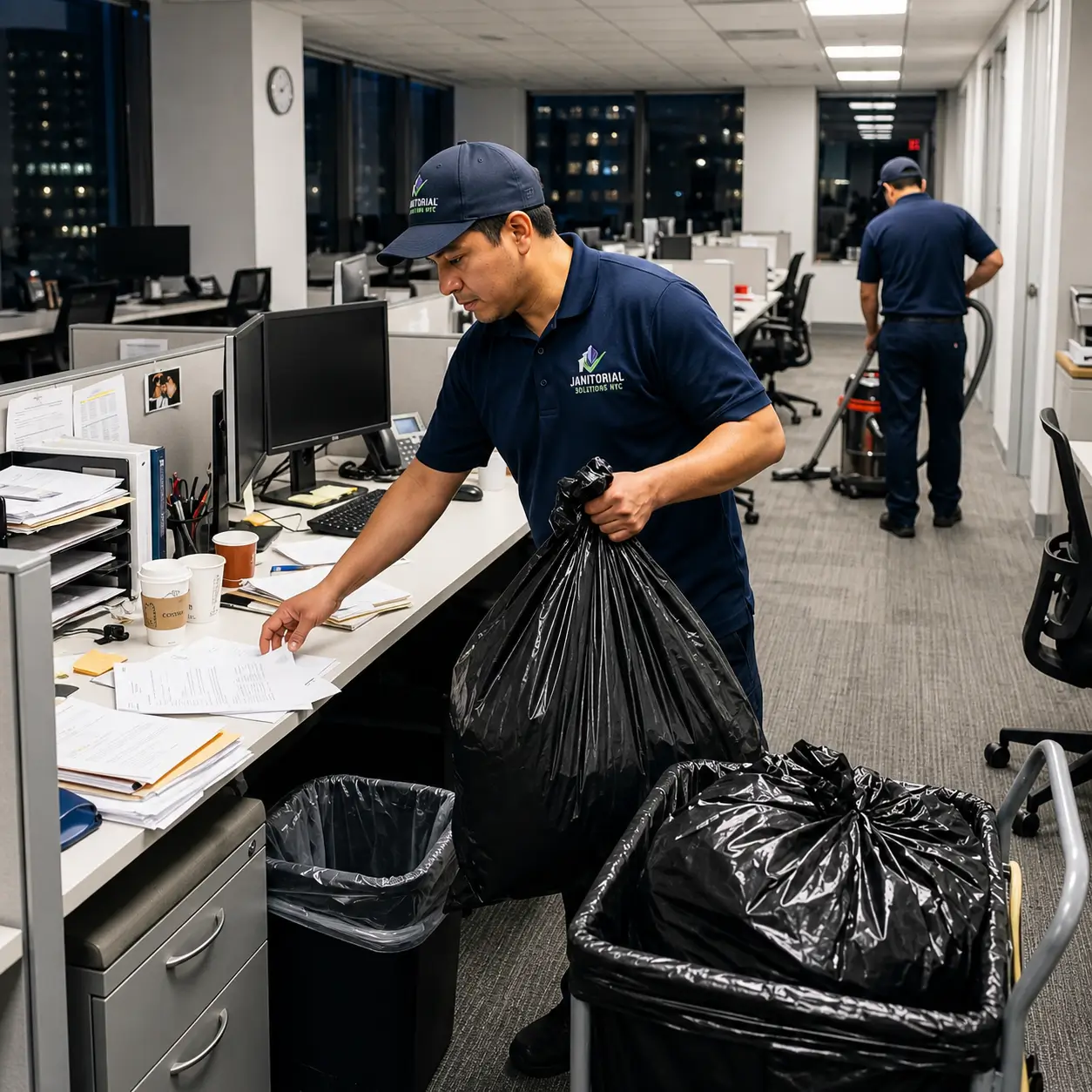
- Emptying trash and recycling
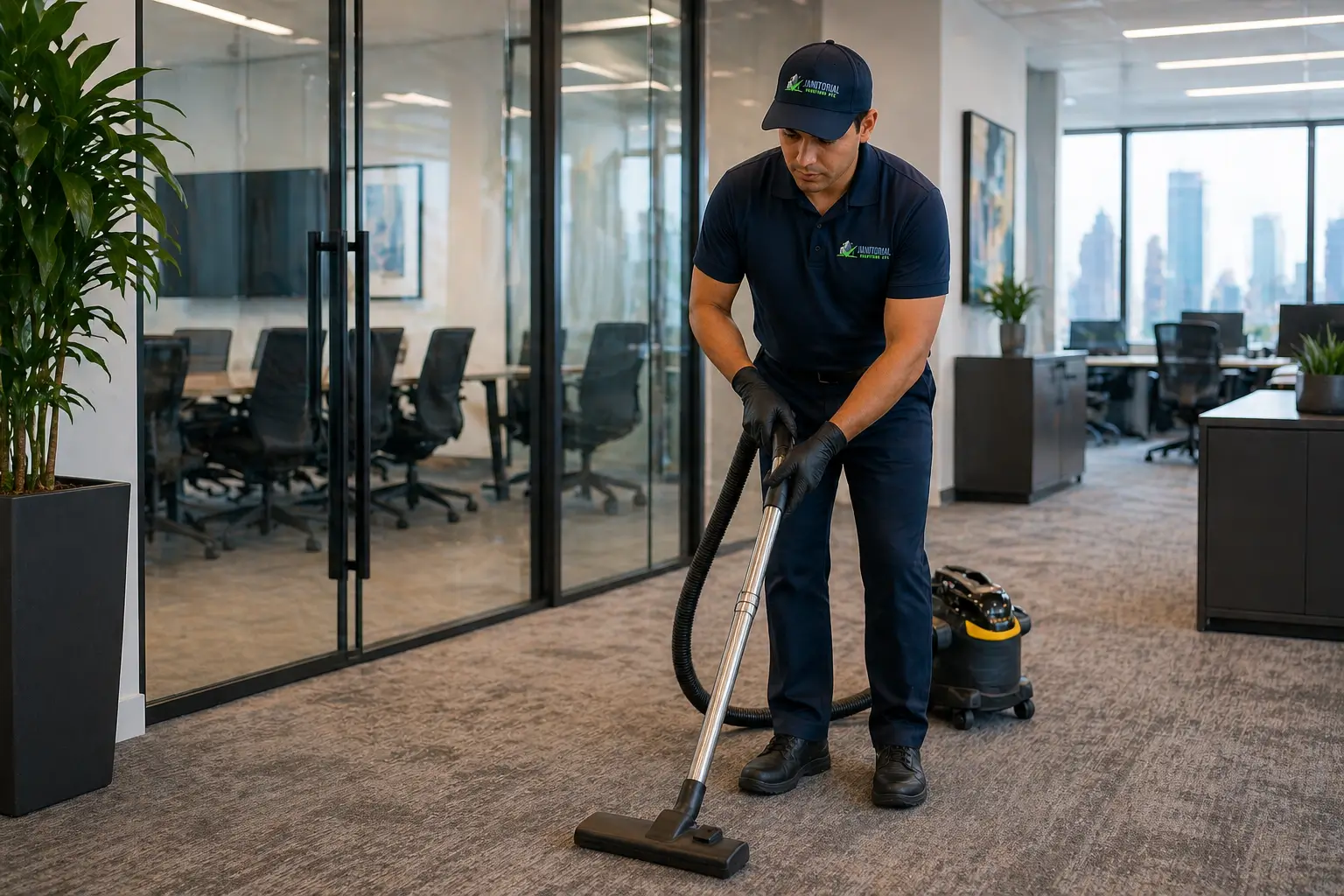
- Vacuuming carpet
- Sweeping and mopping hard floors
- Cleaning restrooms
- Restocking agreed supplies
- Cleaning kitchen and breakroom surfaces
- Dusting accessible surfaces
- Wiping high-touch areas
- Cleaning conference rooms
- Maintaining entrances and common areas
The number of tasks performed during each visit is important. An office receiving a light maintenance service will have a different cleaning time than one receiving full nightly janitorial coverage.
Frequency also matters. Regular cleaning can help prevent buildup, meaning each visit may involve less corrective work than an infrequent cleaning schedule.
ISSA notes that cleaning frequency, building use, soil level, and the services included can all affect commercial cleaning requirements.
How Long Does Deep Office Cleaning Take?
Deep cleaning usually takes longer than routine janitorial maintenance because it addresses areas and buildup that are not handled during every visit.
Depending on the property, deep cleaning may include:
- Detailed restroom cleaning
- Carpet extraction
- High-dusting
- Detailed baseboard cleaning
- Interior glass cleaning
- Detailed kitchen cleaning
- Floor scrubbing
- Floor stripping and refinishing
- Upholstery cleaning
- Cleaning difficult-to-reach surfaces
The condition of the property can have a bigger impact on deep-cleaning time than its total square footage.
A 5,000-square-foot office that has accumulated months of dirt may require more labor than a larger office that receives consistent professional cleaning.
For that reason, deep cleaning is often estimated after an onsite inspection rather than using a simple square-foot calculation.
Does Office Cleaning Need to Be Done Every Day?
Not every office needs cleaning every day.
Cleaning frequency should reflect how the property is used. A small office with limited staff may only require service several times per week. A busy commercial office with high employee and visitor traffic may need cleaning five days per week or more frequent attention to specific areas.
A cleaning schedule can also be divided by task.
For example:
Daily or frequent tasks:
- Restroom cleaning
- Trash removal
- Kitchen cleaning
- High-touch surface cleaning
- Floor maintenance in busy areas
Weekly tasks:
- Detailed dusting
- Additional glass cleaning
- More detailed common-area cleaning
Monthly or scheduled tasks:
- High-dusting
- Carpet extraction
- Detailed floor care
- Other periodic maintenance
The exact schedule should be based on the property’s needs rather than an arbitrary number of visits.
Does More Frequent Cleaning Make Each Visit Faster?
It can, particularly when regular service prevents significant buildup.
An office that is cleaned consistently generally has less accumulated dirt, overflowing waste, and neglected surfaces for each visit. That can make recurring maintenance more predictable.
However, frequency does not automatically mean every visit will take the same amount of time. Events, unusually high occupancy, seasonal conditions, spills, construction work, or changes in office use can increase the workload.
ISSA identifies cleaning frequency and the condition of the space as factors that influence commercial cleaning requirements and pricing.
How Do Professional Cleaners Estimate Office Cleaning Time?
A professional estimate should consider more than the size of the building.
A cleaning company may review:
- Total cleanable square footage
- Number and type of rooms
- Restroom fixture count
- Number of kitchens or breakrooms
- Floor types
- Employee and visitor traffic
- Current condition of the property
- Cleaning frequency
- Required tasks
- Available equipment
- Building access and security procedures
- Required appearance level
ISSA describes cleaning-time calculations using task, tool, time, total units, and training as key components. APPA similarly emphasizes the importance of understanding room types, tasks, frequency, and appearance expectations when planning custodial operations.
This approach produces a more useful estimate than simply dividing square footage by a generic hourly number.
Also Read:
Why Two Cleaning Companies May Give Different Time Estimates
It is normal for two cleaning companies to propose different staffing levels or service times for the same office.
One provider may include more tasks per visit. Another may use different equipment. One may schedule several cleaners for a shorter service window, while another may use fewer cleaners for a longer period.
The scope of work also matters.
For example, one proposal might include only vacuuming, trash removal, and restroom cleaning. Another might include workstation dusting, kitchen cleaning, conference room cleaning, interior glass, and detailed disinfection.
The two proposals cannot be compared accurately based only on the number of hours.
When comparing Commercial cleaners in NYC, janitorial services, compare the actual scope, frequency, staffing approach, and expected results rather than focusing only on the quoted hours.
Does Equipment Change Commercial Cleaning Time?
Yes. Equipment and cleaning methods can affect productivity.
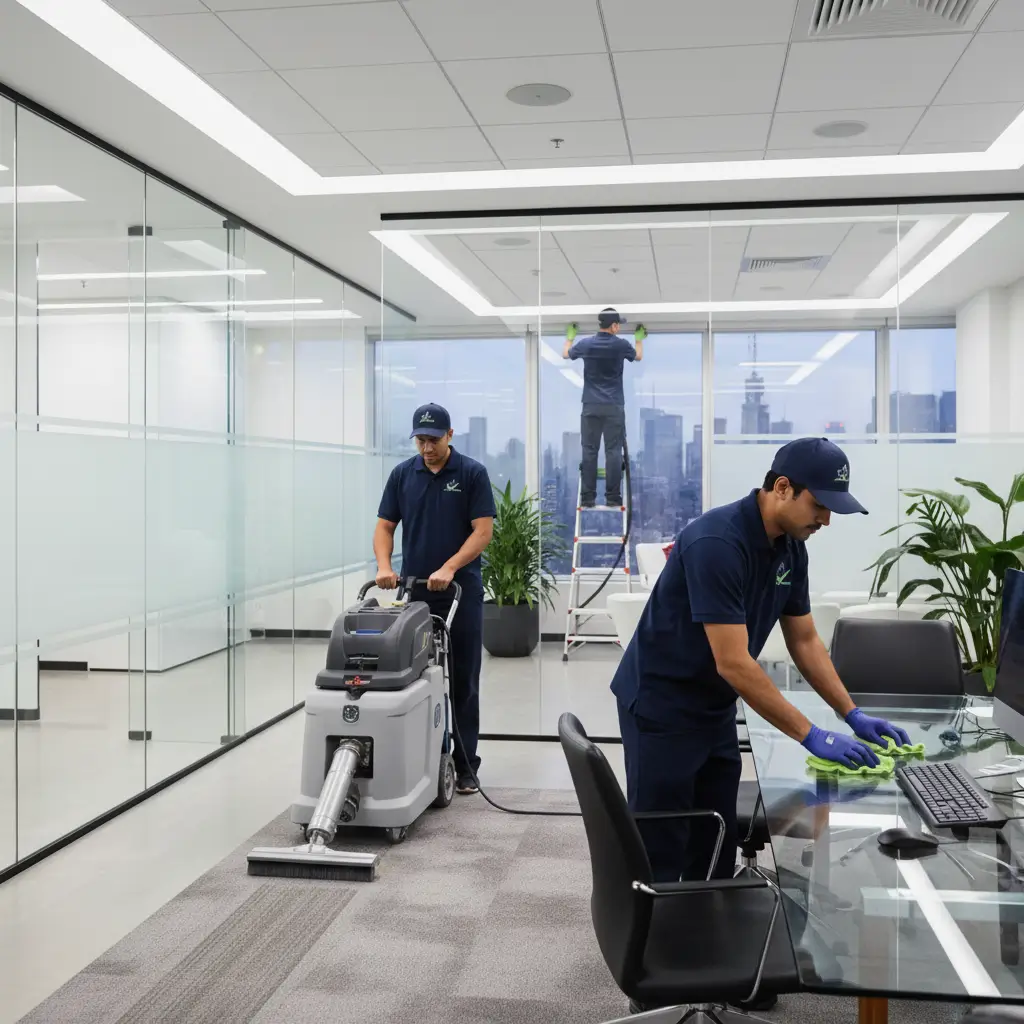
Depending on the facility, commercial cleaning teams may use equipment such as:
- Commercial vacuum cleaners
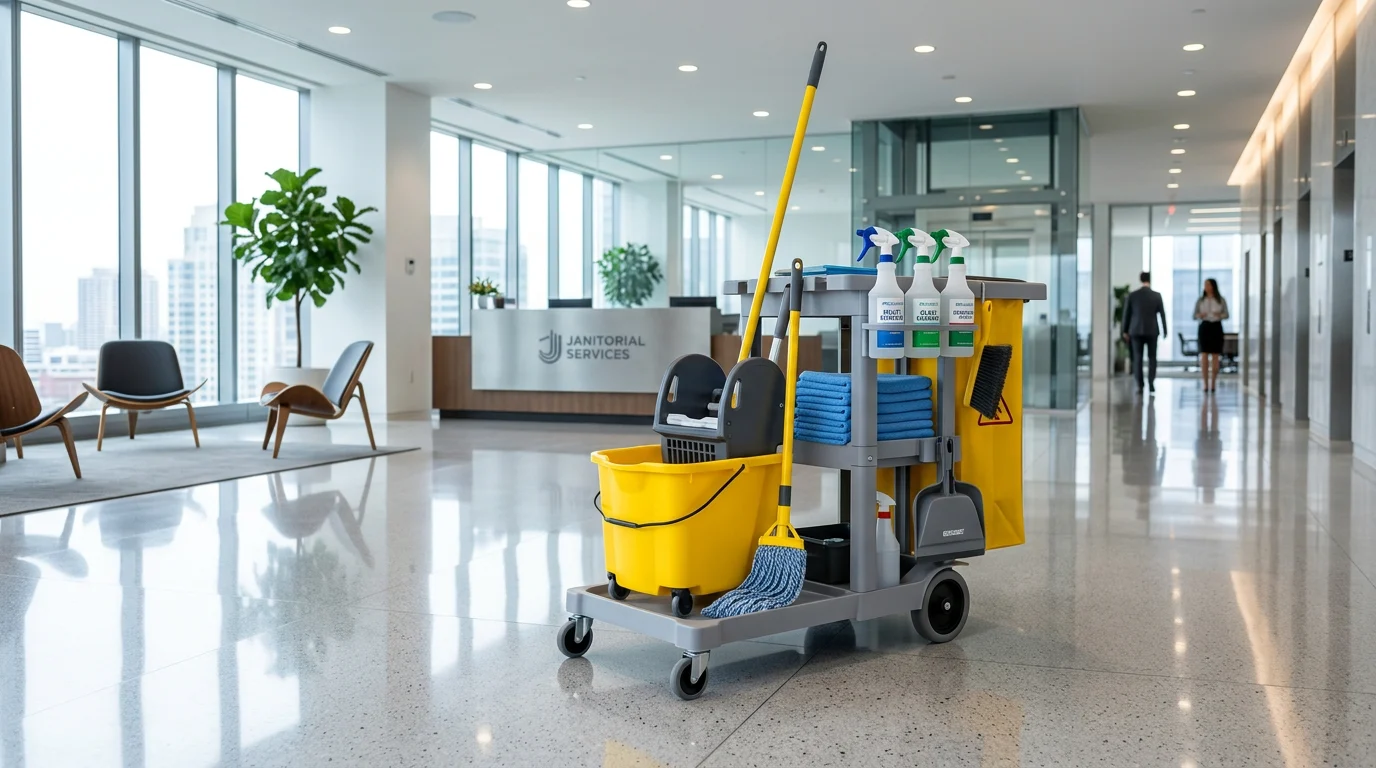
- Microfiber systems
- Automatic floor scrubbers
- Carpet extraction machines
- High-dusting equipment
- Specialized floor-care equipment
ISSA notes that tools, equipment, and technology can influence cleaning productivity. APPA also identifies equipment and operational methods as factors in custodial planning.
The goal should not simply be to finish as quickly as possible. Equipment should be selected based on the surface, cleaning requirement, safety considerations, and desired result.
What Should Be Included in an Office Cleaning Estimate?
Before agreeing to a cleaning schedule, ask the provider to clearly define the scope.
A useful estimate should identify:
Areas Being Cleaned
The proposal should specify whether it covers offices, workstations, conference rooms, restrooms, kitchens, hallways, lobbies, elevators, stairwells, and other common areas.
Frequency
The proposal should state whether cleaning happens daily, several times per week, weekly, monthly, or according to another schedule.
Tasks
Ask exactly what the cleaners will perform during each visit.
Supplies
Confirm whether cleaning products, trash liners, restroom supplies, and other consumables are included.
Periodic Services
Carpet extraction, floor refinishing, window cleaning, high-dusting, and other periodic work should be clearly identified.
Additional Charges
Any work outside the standard scope should be explained before service begins.
A detailed scope helps both the client and cleaning company understand what the scheduled labor is intended to accomplish.
How NYC Office Conditions Can Affect Cleaning Time
New York City offices can have unique cleaning considerations because of building density, foot traffic, weather, and the way commercial properties are used.
Ground-floor entrances can collect dirt and moisture from busy sidewalks. Winter weather can introduce salt and slush into buildings. High-rise offices may also have specific elevator, security, loading, and after-hours access procedures.
Multi-tenant buildings can introduce additional requirements because cleaners may need to work around building management rules and shared spaces.
These conditions do not automatically mean every NYC office takes longer to clean. They simply demonstrate why an accurate estimate should consider the actual property rather than relying on a generic time figure.
When Should an Office Consider More Cleaning Hours?
Additional cleaning labor may be appropriate when the current service is consistently unable to complete the agreed scope.
Signs that the existing schedule may need adjustment include:
- Trash remains after scheduled service
- Restrooms are not consistently maintained
- Floors still show visible buildup
- Kitchen areas require additional attention
- High-traffic areas become dirty before the next visit
- Cleaning staff regularly have to skip tasks
- The office has expanded or added more employees
- Building usage has increased
- New common areas have been added
The solution is not always simply adding hours. The cleaning scope, task frequency, equipment, staffing arrangement, and workflow should be reviewed first.
Frequently Asked Questions About Commercial Office Cleaning Time
How long does it take to clean a small commercial office?
There is no fixed number of hours because small offices can have very different layouts and cleaning requirements. A small office with open work areas and light traffic may require considerably less labor than a similarly sized office with multiple rooms, restrooms, kitchens, and high employee use.
How long does it take to clean a 10,000-square-foot office?
Square footage alone cannot provide an accurate answer. The estimate also depends on the office layout, number of restrooms, floor types, employee count, cleaning frequency, and tasks included.
A 10,000-square-foot office with open floor space may require a different cleaning plan from a 10,000-square-foot office divided into numerous rooms.
Is office cleaning usually charged by the hour?
Commercial cleaning can be priced using different models, including hourly labor, square-foot pricing, flat-rate contracts, or a combination depending on the scope.
ISSA notes that commercial cleaning rates can vary according to building type, frequency, condition, services included, labor, supplies, and equipment.
Does a larger office always take longer to clean?
Generally, a larger cleanable area creates more work, but size alone does not determine the final cleaning time.
A well-organized open office may be more efficient to clean than a smaller but heavily divided space with many rooms and fixtures.
Can multiple cleaners reduce the total cleaning time?
Multiple cleaners can reduce the overall service window by allowing different tasks to happen at the same time.
For example, one cleaner can work in restrooms while another handles floors and a third works on common areas. However, the total labor required does not necessarily decrease simply because more people are assigned to the job.
How long should a commercial cleaning company spend in an office?
The service time should be long enough to complete the agreed scope to the required standard. A shorter visit is not necessarily better if important tasks are skipped, and a longer visit is not automatically evidence of better service.
The appropriate staffing and schedule should come from the property’s actual cleaning requirements.
Should an office be cleaned after hours?
After-hours cleaning is common for offices because employees and visitors are no longer using the space. It allows cleaners to work across workstations, conference rooms, floors, restrooms, and common areas without interfering with normal business activity.
How often should carpets receive deep cleaning?
Carpet extraction frequency depends on traffic, carpet type, visible soil, spills, and the property’s maintenance plan. High-traffic areas may need more frequent attention than low-use areas.
Can janitorial services include deep cleaning?
Yes. Many commercial cleaning companies offer recurring janitorial maintenance along with scheduled deep-cleaning services. However, deep-cleaning tasks should be clearly identified in the contract because they may not be part of every routine visit.
Get a Commercial Office Cleaning Plan Built Around Your NYC Workplace
The amount of time needed to clean a commercial office depends on much more than square footage. Layout, employee traffic, restrooms, kitchens, flooring, cleaning frequency, current conditions, equipment, and the exact scope all affect the labor required.
That is why Janitorial Solutions NYC approaches commercial cleaning around the actual requirements of the property rather than relying on a generic number of hours. A walkthrough can help identify the areas that need regular attention, the tasks that should be scheduled periodically, and the cleaning frequency that fits the way the office operates.
Whether you are reviewing an existing cleaning schedule or looking for Commercial cleaners in NYC, janitorial services, having a clearly defined scope makes it easier to understand what the cleaning team is expected to accomplish during each visit.
Talk to Janitorial Solutions NYC about your office cleaning requirements and request a cleaning plan based on your workplace, schedule, and specific service needs.