A small business may start with employees emptying trash, wiping counters, and vacuuming at the end of the day. That approach can work while the space and team are small. Problems begin when cleaning starts taking employees away from paid work, restrooms become inconsistent, floors need more care, or customers notice that the workplace does not look as clean as it should.
For many businesses, janitorial services in NYC are worth hiring once cleaning becomes a recurring operating task rather than a few minutes of light upkeep. The decision should come down to time, cleaning requirements, facility size, customer expectations, and the cost of managing the work internally.
Are Janitorial Services in NYC Worth It for a Small Business?
In many cases, yes. A small business can benefit from janitorial services in NYC when outsourcing reduces staff cleaning duties, creates a set cleaning schedule, handles tasks that require equipment or supplies, and keeps customer and employee areas maintained without interrupting business operations.
However, hiring a cleaning company is not automatically the right choice for every small business.
A two-person office used three days per week may need limited outside cleaning. A medical office, restaurant, retail store, fitness studio, daycare, or busy professional office may need much more frequent service.
The better question is not, “Is professional cleaning worth paying for?”
The better question is, “What does cleaning the business correctly cost when time, labor, supplies, equipment, and management are counted?”
That comparison gives a small-business owner a better answer.
Small Business Cleaning Costs Include More Than the Cleaning Invoice
The monthly quote from a commercial cleaning company is easy to see.
The cost of handling cleaning internally is harder to measure because it is spread across payroll, supplies, management time, equipment, and interruptions.
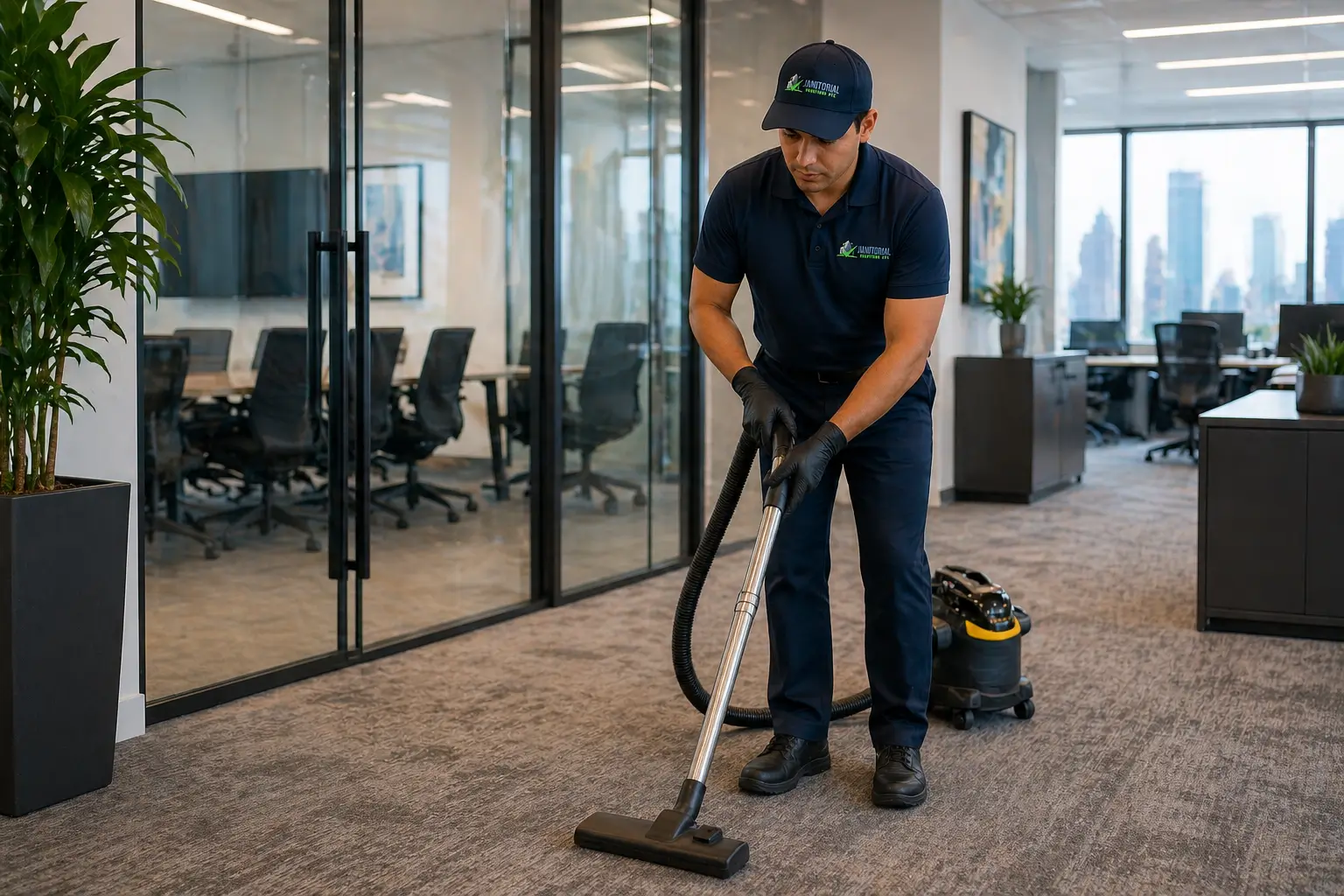
Suppose an office manager spends twenty minutes each evening emptying trash, wiping the kitchen, checking the restroom, and vacuuming common areas. That time may appear minor.
Across five workdays, that becomes more than an hour and a half each week. Add restocking supplies, buying cleaning products, handling spills, cleaning floors, and dealing with deeper cleaning, and the time increases.
If a business owner does the work after closing, the expense does not disappear because no separate cleaning invoice exists. The owner is still spending time on cleaning instead of customers, sales, scheduling, accounting, or other work.
In-House Cleaning Has Direct Costs
A business cleaning its own workplace may need to pay for:
- Employee cleaning time
- Vacuums, mops, buckets, and cleaning tools
- Replacement equipment and repairs
- Trash liners and paper products
- Cleaning chemicals
- Gloves and other protective supplies
- Floor-care products
- Storage space
- Training and supervision
Some offices need little equipment. Others have carpet, tile, restrooms, kitchens, glass, and high-traffic entrances that create a larger supply list.
These expenses should be compared with the complete scope of outsourced commercial cleaning services, not only the hourly price.
Staff Time Has an Opportunity Cost
An employee hired for reception, administration, sales, or customer service has another primary job.
Every hour spent cleaning is an hour not spent on that job.
This does not mean employees should never wipe their desks or clean a spill. Basic shared responsibility is normal in a workplace.
The problem begins when regular cleaning becomes an unofficial second job.
If employees are expected to vacuum floors, scrub restrooms, remove trash, mop entrances, and restock washrooms, the business should count that time as part of its cleaning cost.
Janitorial Services Can Give Small Businesses More Consistent Cleaning
Consistency is one of the main reasons small companies move from employee cleaning to janitorial services in NYC.
An informal system often depends on whoever has time.
The trash gets emptied Monday but not Tuesday. The restroom receives attention after someone complains. The break room gets cleaned until a busy week causes everyone to leave early. Floors receive vacuuming but no periodic deeper care.
The problem is not always effort. Employees have other priorities.
A janitorial schedule assigns cleaning work to specific visits and tasks.
That can include trash removal, vacuuming, mopping, restroom cleaning, high-touch surfaces, break-room cleaning, dusting, and other agreed work.
The scope can also distinguish between routine tasks and periodic services.
A floor may need mopping several times each week but machine cleaning less often. Carpet can receive vacuuming during regular visits and extraction when soil buildup requires deeper treatment.
A written scope makes it easier for a small business to know what is being cleaned and how often.
Professional Cleaning Can Protect Employee Time
Small businesses often operate with fewer employees than large companies.
That makes each person’s time more important.
If three employees spend fifteen minutes cleaning every evening, the business is using forty-five minutes of labor per day. Over a normal five-day week, that adds up to almost four hours.
The owner should ask what those hours could accomplish elsewhere.
A receptionist might answer customer messages. A salesperson could complete follow-up calls. A manager could prepare the next day’s work. The owner could leave at a reasonable time instead of cleaning after everyone goes home.
Hiring office janitorial services shifts recurring facility cleaning away from employees whose jobs are focused on other business tasks.
The value is not simply that someone else empties the trash. The business gets those staff hours back.
Janitorial Services in NYC Can Help Maintain Workplace Safety
Cleaning also affects how people move through the workplace.
Spills, wet floors, debris, and clutter can create hazards if they remain in walkways.
The Occupational Safety and Health Administration requires places of employment, passageways, storerooms, service rooms, and walking-working surfaces to be kept clean, orderly, and sanitary. OSHA also requires workroom floors to be kept clean and, as far as practical, dry.
A professional janitorial contract does not transfer every safety responsibility away from the employer.
Employees still need a process for handling a spill that happens during business hours instead of leaving it until the evening cleaner arrives.
However, scheduled commercial janitorial services can support routine maintenance by keeping floors, common areas, waste areas, and other assigned spaces on a consistent cleaning cycle.
This becomes more important in NYC businesses with frequent customer traffic, street debris, rainwater, winter moisture, deliveries, and shared entrances.
Routine Workplce Cleaning Does Not Mean Disinfecting Everything Every Day
Small-business owners sometimes assume professional cleaning means applying disinfectant to every surface during each visit.
That is not always necessary.
The Centers for Disease Control and Prevention states that regular cleaning of surfaces helps reduce germs in community facilities such as offices, gyms, businesses, and community centers. CDC guidance says high-touch surfaces should be cleaned regularly, and other surfaces when they are visibly dirty. It also states that cleaning alone is enough in most situations, while disinfection becomes more relevant where people have been ill or when other conditions call for it. CDC facility cleaning guidance explains the difference between cleaning, sanitizing, and disinfecting.
This distinction can help small businesses avoid paying for unnecessary processes.
A standard office may need routine cleaning of desks where included in the scope, handles, restroom fixtures, counters, floors, and common areas.
A medical practice or another regulated environment can have different cleaning and disinfection requirements.
The cleaning plan should match the facility.
Customer-Facing Businesses Have More to Gain From Commercial Cleaning
A client may never see the storage room or staff office, but customers notice the areas they use.
A dirty entrance, full trash bin, restroom odor, dusty reception desk, or marked floor can affect how people judge the business before anyone provides the service they came for.
This makes janitorial services in NYC more valuable for customer-facing businesses.
Retail stores, salons, restaurants, showrooms, clinics, law offices, financial offices, fitness facilities, and other businesses receive visitors throughout the day.
For these companies, cleaning supports presentation as well as facility maintenance.
The standard also needs to remain consistent.
A business cannot look clean only on Monday morning. Customers may walk in at any time.
That can justify more frequent cleaning in entrances, reception areas, restrooms, and other customer spaces while low-use back offices receive less attention.
Small Offices May Not Need Daily Janitorial Services
Outsourcing cleaning does not mean committing to nightly service.
One advantage for a small business is the ability to set cleaning frequency around actual use.
A private office with six employees may need professional cleaning two or three times per week. A small office occupied only a few days per week may need less.
A busy storefront could require daily service.
Cleaning frequency may also vary inside the same property.
Restrooms and kitchens can need attention more often than conference rooms. Entrance floors may collect dirt faster than private offices. Trash may need removal daily while dusting can follow a different cycle.
A useful small business cleaning service plan should therefore be based on traffic and tasks rather than a fixed package that treats every room the same way.
This is one place where professional service can be worth the cost. Paying for the cleaning the business needs is better than paying for unnecessary work.
Janitorial Services Can Reduce the Need to Buy Commercial Cleaning Equipment
Routine wiping and vacuuming require basic equipment.
Deeper floor and carpet care can require much more.
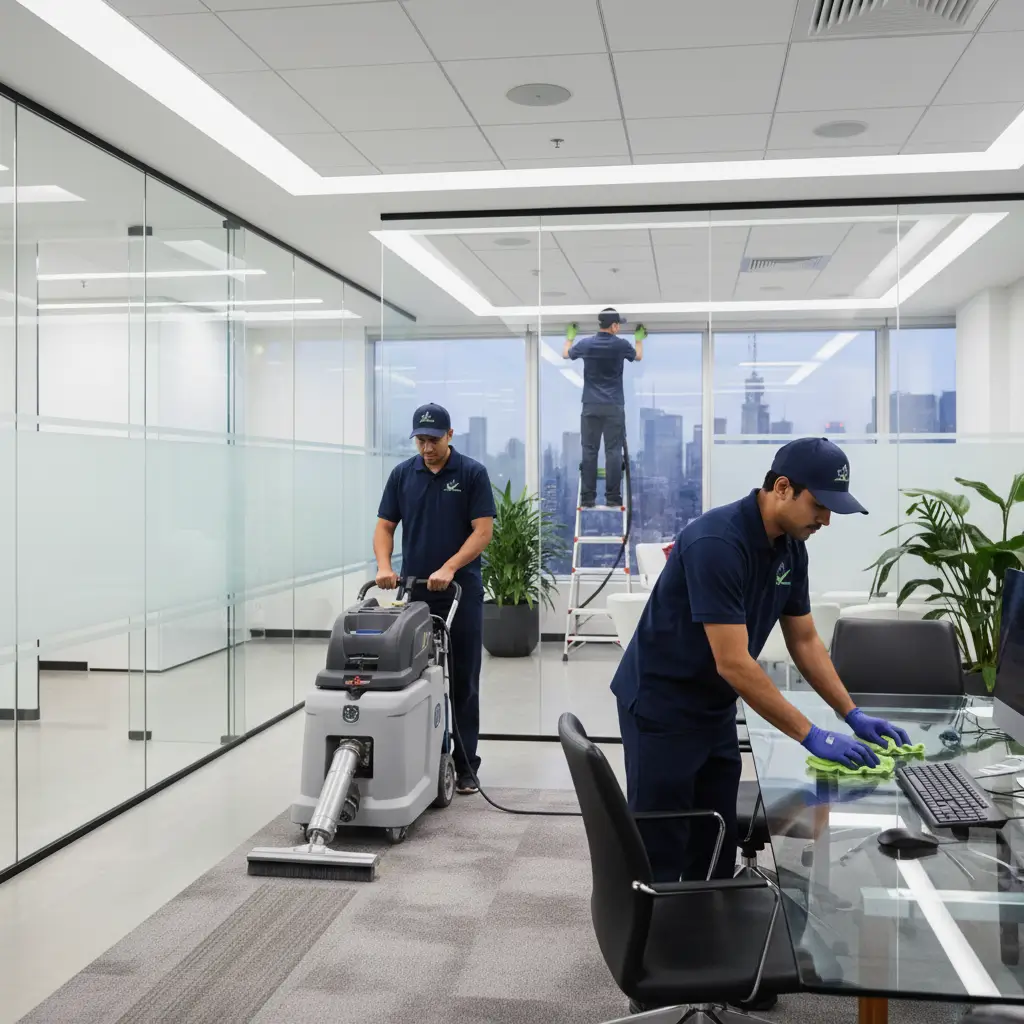
Depending on the property, cleaning may involve commercial vacuums, floor machines, extraction equipment, wet vacuums, microfiber systems, extension tools, and other supplies.
A small business can purchase equipment, but then it also has to store, maintain, repair, and replace it.
Employees need to know how to operate the equipment and which products can be used on each surface.
A cleaning contractor normally supplies the equipment included in its service arrangement, though every contract should state what is supplied by the cleaning company and what is supplied by the client.
This matters for an NYC business where storage space is limited.
Using a closet for cleaning machines, chemical containers, paper products, and replacement equipment carries a cost when every square foot of commercial space matters.
Outsourced Cleaning Can Make Supply Management Easier
Cleaning involves more than labor.
Someone has to notice when trash liners are running low. Restroom supplies need checking. Cleaning chemicals have to be replaced. Equipment bags, filters, pads, mop heads, and other items wear out.
If nobody owns this process, shortages appear at the wrong time.
A janitorial arrangement can simplify part of this work, depending on the contract.
Some cleaning companies provide their own cleaning products and tools while the business supplies restroom consumables. Other agreements may include restocking or supply management.
Small-business owners should ask what is included before comparing quotes.
A cheaper quote can become less attractive if the business still has to provide most equipment and manage every supply order.
Is Hiring Janitorial Services Cheaper Than Hiring an Employee?
For many small businesses, hiring a cleaning company can make more sense than creating an in-house janitor position.
A dedicated employee creates costs beyond hourly pay.
The business may need to consider payroll administration, taxes, training, supervision, scheduling, coverage during absence, equipment, supplies, and employment obligations.
An outsourced cleaning service places many of those operational responsibilities with the contractor.
That does not automatically make outsourcing cheaper in every case.
A large facility needing full-day cleaning may reach a point where in-house staff makes operational sense. A building that requires constant porter service may also have different staffing needs from a small office cleaned after closing.
For a small company needing a few cleaning visits per week, paying for the needed service hours can be more practical than building a separate cleaning position.
The correct comparison is total annual cost against total annual service, not one employee’s hourly wage against one contractor’s hourly rate.
Janitorial Services Become More Valuable as a Business Grows
A cleaning system that works for five employees may stop working at fifteen.
More staff usually means more restroom use, more trash, more food in break areas, more foot traffic, and more shared surfaces.
Customer traffic can grow at the same time.
This is why janitorial services in NYC often become more useful before a business becomes large.
The owner does not need to wait until the workplace looks neglected.
Watch how much management time cleaning takes and how often employees have to stop their own work to handle facility tasks.
If the cleaning burden keeps increasing, outsourcing can give the company a structure that grows with occupancy.
The schedule can move from weekly to several times per week or daily as the business changes.
Which Small Businesses Benefit Most From Janitorial Services in NYC?
Some businesses gain more from recurring janitorial service because cleaning affects daily operations.
Professional service can make sense for:
- Offices with regular employees and client visits
- Retail stores with customer traffic
- Medical and dental offices with facility-specific cleaning needs
- Restaurants and food-service businesses
- Fitness studios and gyms
- Salons and personal-care businesses
- Childcare and educational facilities
- Property management offices
- Shared workspaces
- Showrooms and professional service businesses
The scope should still change by business type.
A law office does not need the same cleaning process as a dental practice. A clothing store does not have the same floor and restroom use as a restaurant.
A janitorial company should first understand the space, traffic, schedule, floor surfaces, restroom count, and cleaning priorities.
How Can a Small Business Tell If Janitorial Services Are Worth the Cost?
Look at what is happening now.
If cleaning takes little staff time, the workplace remains in good condition, supplies are controlled, and no work is being missed, the current system may still be suitable.
Professional service becomes easier to justify when:
- Employees spend paid work time on recurring cleaning tasks.
- Restrooms or break rooms are cleaned inconsistently.
- Trash begins accumulating between cleanups.
- Floors require equipment employees do not have.
- The owner stays late to clean.
- Customers regularly use the workplace.
- Cleaning duties create arguments between employees.
- Supplies and equipment are not being managed.
- Business growth has increased traffic.
- The current cleaning routine is no longer keeping up.
Several of these issues appearing together usually mean cleaning has become an operating function that needs its own plan.
Ask the Right Questions Before Hiring a Janitorial Company
The value of janitorial services in NYC depends on the scope you purchase.
A business should know what happens during each visit before signing an agreement.
Ask which rooms are included, which cleaning tasks are routine, and which services cost extra. Confirm whether cleaning supplies and equipment are provided. Discuss access procedures if the cleaner will work after hours.
Also ask how missed work or service concerns are handled.
The lowest quote is not useful if essential tasks are excluded.
At the same time, a small business should not pay for a cleaning package built for a much larger facility.
Start with the work that creates the biggest burden or affects the most-used areas. The plan can change as the business grows.
Make Janitorial Services Work for the Size of Your Business
The point of outsourcing cleaning is not to turn a small office into a facility with an oversized maintenance program. It is to stop recurring cleaning from consuming staff time and to keep the areas employees and customers use on a dependable schedule. If your team is cleaning restrooms after work, floors are falling behind, or nobody knows who is responsible for the next supply order, the low-cost DIY approach may already be costing more time than it saves.
At Janitorial Solutions NYC, we can help small businesses assess their cleaning needs and build a schedule around workplace size, traffic, operating hours, and the areas that require the most attention. For a small business comparing in-house cleaning with janitorial services in NYC, start by listing the hours your staff currently spends cleaning and the tasks that keep getting missed. That gives you a clear basis for comparing professional service with what the current system is already costing the business.